Archive » March 2026 » Columns

PRINCETOWN — It’s the 17th day of March, St. Patrick’s Day, three days from spring, otherwise referred to as the Vernal Equinox, to be scientific about it, when the sun is on a perpendicular line with Earth’s equator, hence we have equal length days and nights, and here we are congregated at the Chuck Wagon Diner in Princetown, next door to Ketchum’s Auto Repair where the scribe’s truck’s airbag system was recently and magically repaired within budget and quickly.

Of importance to some, is that Turnpike Power, which is pretty close to the Chuck Wagon on Western Avenue, is still open for business, dispensing lawn mowers and snow blowers, contrary to some inaccurate rumors.

Ron, dressed for this auspicious Irish occasion in green hat, shirt, and tie, meets us right inside the door of the Chuck Wagon to confirm our coffee requirements, very reassuring to those of us who really crave that first cup.

On the subject of the changing of the seasons, one of our members was so optimistic as to have put away his snowplow on Monday when it was 60 degrees. Of course, he is blamed for bringing the snow and sleet and flurries and cold that greeted us this morning.

It was also reported by one OMOTM that he had cocktails outside yesterday on his deck with a friend, an anomaly now as we view the blowing snow out the back window of the Chuck Wagon. Comments were heard about high winds overnight with branches down and roads closed, yikes.

AI did not invent these stories

As we OMOTM are struggling with the computerization that surrounds and engulfs us, some recalled the early days of computers when they were extremely expensive, and very low functioning by today’s standards. As an aside, it must be obvious that the scribe doesn’t use AI to compose this column.

All the material in this column comes from our conversations about current concerns and our recollections from bygone days.

Without mentioning any names, recollections of a famous former loveable and yet cantankerous denizen of the Hill were made with a few great stories. One story involved a car that was parked blocking an accessway without permission or the proper amenities observed. Said parker returned to the vehicle to find it surrounded by a quickly constructed fence.

Caving got some bad reviews this morning, with recollections of cave rescues, a near drowning, fear of small spaces, and the utter and total darkness experienced underground. Like skydiving, caving must be reserved for the most hardy, brave, curious, and adventurous among us.

Memory techniques

As much as we all recognize and greet and converse with each other on these Tuesday mornings, we are pretty light on using and knowing names of all of our companions. This gave rise to a discussion of memory techniques, especially for names.

Some are said to have mastered this, and even demonstrated amazing competency to this end, but alas not some of those among us this morning.

Solace from Sol

Some conversations were heard regarding solar energy, which is really starting to kick in now that the snow is off our panels and the days are longer and the sun seems more likely to show itself.

Also, note was made that the cost of electricity is not retreating any time soon. So, barring a reduction in National Grid rates, maybe the sun will favor us with some needed support. Optimism is something that does characterize this bunch.

Pears and kiwi?

Discussions about hearing always put in a strong showing as demonstrated by how we try to speak loudly and clearly, yet still suffer from some mishearings. It can be entertaining to repeat what you thought you heard and compare that to what was actually said, if you can ever get it down to that level of accuracy.

One of our old members was heard to have had bear and tea leaf as a snack before heading off to breakfast. We finally refined that down to pears and kiwi. Sometimes it’s hard to know if it’s the fault of the brain or the ears.

Still here

Hurricane Irene still evokes many recollections after 15 years, and it was recalled that the Berne Agway or Old Berne Mill, suffered extensively from that particular event, never quite recovering completely.

For example, we think that the old cash register and coke machine disappeared forever into the Fox Creek. Heroically, the business reopened, is still open, and we report it is a good source of auto parts. 

In the dead of winter, when the sun barely puts in an appearance, showing up for early Tuesday breakfast is a feat to be seriously admired, but now in this kinder and more hopeful season, it’s lighter and warmer in general and more conducive to all this fraternizing, and here we are plugging along, albeit a tad more cheerfully than in those darker days; these are the guys greeting this fine morning and puzzling about how old age came on so fast: Harold Guest,  Wally Guest, Roland Tozer, Jamey Darrah, Rich Albertin, Marty Herzog, Chuck Batcher, Warren Willsey,  Pastor Jay Francis, Al Schager, Roger Shafer, Robert Schanz, Mark Traver, Joe Rack, Herb Bahrmann, Gerry Cross, Jack Norray, Dick Dexter, Bob Donnelly, Allan DeFazio, Dave Hodgetts, John Dab, Paul Guiton, John Jazz, Dick Dexter, George Washburn, Will Lichliter,  Frank A. Fuss, and me.

Unless you’ve been living in your own Private Idaho, you must have noticed how much Latin culture has permeated our lives. From newscasters, weather persons, and journalists to music — think halftime at the Super Bowl — the Latin influence is just about everywhere. Those rolled Rs are all over the place.

I listen to a lot of radio, for both news and entertainment. There is a correspondent on NPR who does a lot of feature reports. She signs off at the end by saying, “This is Mandalit del Barrrrrco,” just rolling that R like dripping honey off a spoon; you can tell she’s enjoying it so much. Imagine getting that kind of satisfaction just from saying your own name.

In high school, we had to take a language class. I so wanted to take Italian, because most of my relatives and many of my classmates spoke Italian fluently. Had I been able to take Italian, I would have been able to use it with a lot of people in real life. That’s the best way to learn a language, by interacting with native speakers.

Alas, my school didn’t offer Italian, so I took Spanish. I really had no interest in Spanish so I didn’t work too hard at it. You always learn the best when you’re really into something, and I just wasn’t. My Spanish teacher, however, was totally into it.

He would find Spanish words that were, according to him, especially fun to pronounce because they forced you to use your tongue, lips, and mouth so adroitly. I still remember two of those words:

— Teotihuacan, a pre-Aztec, colossal Mesoamerican city; and

— Quetzalcoatl, a wise God.

When he pronounced these words, it was like an Olympic event. I’m not kidding. I was just glad I was sitting in the back so I didn’t get “sprayed.”

The only other thing I remember from that class is two sentences. One is perhaps the most useless sentence of all time and, surprisingly, the other is the most useful sentence of all time.

The useless one is: “De que color es tu corbata?” This means, “What color is your tie?”

Why would anyone except a blind person ever utter that sentence, and if you are indeed blind, you have bigger things to worry about that what color someone’s tie is, I would think.

The other sentence, the really useful one, is: “Dov'è il bagno?” That means, “Where is the bathroom?”

I don’t care where in the world you find yourself, as long as you know how to find the bathroom, you’re OK.

Ironically, lately I’ve been looking into learning Spanish. It’s so commonly spoken now that it would be incredibly useful to get familiar with it.

My old teacher would love it, saying “I told you so” — in Spanish, of course. But how to learn it after all these years? Leave it to the library to come to the rescue, as usual.

If you go to this web site — https://library.transparent.com/guilderlandny/ — you will find a wonderful app called Transparent Language. Here you can learn many different languages, all for free. How great is that?

I’ve already started Spanish. They start with how to pronounce each letter and build up from there. This is a terrific resource, and another reason why libraries are number one in my book, no pun intended.

An interesting thing about Spanish is the nouns have gender — that is, they are either male or female. Male nouns end in O, female nouns end in A, but it’s not always that straightforward.

Wouldn’t you think “house” is male? But the word for house is “casa.” Boys and girls are ninos and ninas, so that’s easy.

Sometimes it depends on the context. For example, the Pope is el Papa if it’s a masculine context, and la papa if feminine. Having to think about the gender of nouns is something I don’t normally worry about, but as an “el estudiante” of Spanish I might have to.

The really odd thing about learning any new language is how to deal with idioms. An idiom is a phrase or expression whose meaning cannot be understood from the literal definition of its individual words.

The worst thing about idioms is that they are often specific to an individual language or culture, making it very difficult for non-native speakers of that language to understand them.

Let’s look at some common idioms. Imagine if you were teaching English to a non-native English speaker and you had to explain these:

— “Under the weather”: feeling sick or ill;

— “Spill the beans”: to tell a secret;

— “Cost an arm and a leg”: something that is very expensive;

— “Beat around the bush”: avoiding a topic directly;

— “Let the cat out of the bag”: unwittingly revealing a secret.

Idioms make it really hard to become proficient in a new language. This is why the best way to learn is to speak the language with people who speak the language. That’s how you can pick up on idioms or phrases. Now if native language speakers would just slow down.

If I haven’t convinced you yet of trying to get on board with Latin culture and influence, here is something to reel you in. We are fortunate in the Capitol District to have many free concerts during the summer.

There is a Latin band that plays all over the place and is just outstanding. The band is called “Alex Torres and his Latin Orchestra.” Find out about them here: https://alextorres.com/.

 I’ve seen this band several times and they are incredible. Tremendous horn section, excellent musicians, and multiple vocalists. When you see this band live there is always a huge crowd right in front of the stage dancing and having a great time.

I don’t see how it would be possible to hear them play and not come away with a huge appreciation for Latin culture. Those folks like to have fun. My kind of people.

I don’t know if I’ll ever become fluent in Spanish, but I’m sure having a lot of fun trying. Me apasiona aprender siempre!

DELANSON — On this 10th day of March, still recovering from springing our clocks forward last Sunday, we OMOTM assembled our hungry loquacious forces at Gibby’s Diner, perched on Route 7, close to the corner with Route 395 which heads north to the heart of Delanson, overlooking a beautiful valley to the rear and large sculpted evergreens to the east side.

You can blame loquacious on the online thesaurus, which responds to a quest for a more interesting word from time to time.  It means talkative, which we are.

At Gibby’s, the regulars really aren’t there on Tuesdays because on this day of the week, Gibby’s is only open graciously and especially for us OMOTM, and we fill up the back couple of rooms nicely.  Of interest this morning is that our main hostess, owner, and excellent coffee person, seemingly too young for this, but what do we know about age, is about to be a grandmother.

Possibly unrelated to that news, one of us recounted the amazing appearance of a bald eagle, fully visible and nearby, dramatically making itself known. This may always and forever be a remarkable sight to see, but the conversation led us to realize that such sightings are getting more common of late, presumably due to environmental improvements, limited pesticides, especially the elimination of DDT. In this case, our OMOTM was riding a bicycle and was confronted, endangered, and delighted all at once.

Health matters

So, on to matters of health and well being. Statins, the drugs, get a very low approval rating frequently.  These drugs are supposed to do nice things for us like lower our cholesterol, and maybe some other hopeful things, but the consensus is that they wreak havoc on other facets of our well being. General achiness, possibly even a contributor to diabetes, yikes. As if we can’t achieve these failings on our own.

A common theme to our conversations is about hearing, or rather the lack of it.  Hearing aids are of interest, and used by many of us, but they are always found wanting.

First of all, of course, there’s cost and quality, but after that, it is concluded that hearing aids may increase volume, but do little somehow with understanding, a bit of a technical or physiological mystery perhaps.

The other complaint, which is frequently featured in this rant, is that our spouses or significant others are perceived as noncompliant. They will not speak up Or they turn around and walk away mid-sentence, leaving the sound drifting out of audible range.

One advantage to our venue is that the complainants are not present to defend themselves. Not that we could hear them anyway, due to their aforementioned noncompliance.

Continuing the venture into this area of danger with spouses and significant others of the other persuasion, we discuss the many perceptions and thoughts that we have but are quite different from those with whom we differ, sometimes dramatically, and yet treasure.

These areas of difference vary regarding everything from how to negotiate a corner in traffic to more compassionate instincts. The conversation leads to how we need to survive these areas of possible conflict if we want anybody to care for us as we age. The survival instinct surfaces!

And survival is sought as we organize our daily dosages of pills for the many shortcomings that have been diagnosed. Plastic pill boxes try to keep us on target with these requirements, yet a stray pill can be found here and there, on a seat cushion, on a chair, begging the question of what this could mean.

Did we skip one, lose track of one, does this explain some abnormality of function? Finally, some of us should be awarded an M.D. or a Ph.D. or a pharmacist certification for all we have learned about practical physiology and pharmacology.

Signs of spring

Something we have to look forward to as we reconvene each week at this time of the year is the re-emergence of some beautiful old restored vehicles. Some of us have applied ourselves lovingly to these and are eager to share them.

These vehicles are too precious to be exposed to the snow and ice which, truth be said, they were never designed to survive. But soon we will be enjoying them again, maybe a month from now, perhaps refreshed in heated workshops during those dark winter months.

But sitting outside all those months has been the burn pile. How and when to execute it: Coming up soon is a date after which you may not burn, due to dry grass above the wet ground, which allows the flames to fly across a field even when the ground is mushy.

So we may have to wait a few weeks until we get the all-clear, probably posted on the local fire-department sign. Many of us may recall chasing these flames across fields in the spring, back when we had more spring of our own.

Finding ourselves a mere ten days from spring, having sprung the clocks forward, sun just creeping up in the east, a half moon still showing above us, and well into that transitional time where drainage is intermittent, giving rise to the formation of alternating mud and hard ground, assembled the morning tough guys: Harold Guest, Wally Guest, Ed Goff, Frank A. Fuss, Will Lichliter, Rich Albertin, Pastor Jay Francis, Al Schager, Joe Rack, Roger Shafer, Jamey Darrah, Herb Bahrmann, Elwood Vanderbilt, Allan DeFazio, Glenn Patterson, Roland Tozer, Chuck Batcher, Warren Willsey, Robert Schanz, John Jazz, Dick Dexter, Gerry Cross, Jack Norray, Dave Hodgetts, Bob Donnelly, Paul Guiton, John Dab, and me.

SCHOHARIE — On the 3rd day of March, we OMOTM marshalled our hungry forces in Schoharie at the Your Way Café, on the north edge of the village.  At the Your Way, the regulars seem mostly pushed to the corners, but they are charitable to us and grant us their space.

This spot was greatly impacted by Hurricane Irene. It was swamped and had to recover from almost nothing. Devastated by this flooding of 2011, it was previously the popular Alley Cat, which never returned, and was rebuilt and reopened as the Blue Star Café.

More recently, the café was bought and reopened as Schoharie County’s Diner. Now this venue is named the Your Way Café and is open every day except Thursday, closing at 2 p.m. And we do have it our way, compliments to the owner, Darcy, and the staff, Amber and Kelly, who took excellent care of us finely-aged breakfasters.

Leaving footprints

One of our most esteemed former emeritus founding members left behind a legacy of homemade hand-crafted clocks at several of our OMOTM diners, and it is always nice to see these clocks. We saw one at Mrs. K’s last week, and we were on the lookout for one this week.

It seems that this member was short on cash at a visit for lunch with his wife on an occasion at the Your Way, as recounted by Darcy, the owner of said café, and was so grateful to be granted credit, that he gifted the diner with a clock, which does live to this day at the Your Way. We love to think we might be leaving such nice footprints behind us.

In this season of ice, the art of navigating, especially driveways with flows of the slippery stuff, was examined. A headstart is recommended, and also, the owner of the driveway might have buckets of sand available as needed.

New words for waste

Back when, we recall, we used to go to the “dump” with garbage, probably just throwing it willy-nilly over the edge into a pre-dug hole or on a spot prepared for later excavation and burial.

But calling this a dump now seems a little irreverent or disrespectful when these facilities are now quite sophisticated, well lighted, controlled, and staffed. They are processing enterprises using compressors, and everything is hauled away to mostly we don’t know where.

We don’t mention the cost of constructing these lovely places. But we should mention all the user participation required in presorting our waste into paper, plastic, metal, cardboard, electronics, and finally garbage.

So the new terminology, if you think old dogs could learn new tricks, might better be “transfer station” out of respect for all this modern enhancement. Or stick with what you know.

Unnerving surveillance

Cameras are common everywhere today, but of special interest at the table on Tuesday morning were the ones installed on poles with self-charging solar panels to monitor traffic, and record license plates and any vehicular activity.

This may be of special value in the event of a crime that needs to be solved, but the thought of being observed so much was found to be unnerving to some who prefer more privacy.

No embellishment

Some of the memories around the breakfast table on Tuesday mornings give the appearance of being a little foggy, and may suffer from enhancement or embellishment over the years, so when the subject of a bad fire at the school exactly 100 years ago came up, not to be a sceptic of course, but it seemed worth fortifying this with some fact-checking.

After some research, it was uncovered that the Schoharie High School was totally destroyed by fire early in the morning on Feb. 11, 1926, resulting in an estimated $100,000 loss. Credit to The Altamont Enterprise and Mohawk Museums for that information.

As an aside, it is likely true that today the front entrance probably would cost more than that. A comment was reportedly made by one former scholar that he wished it had happened when he went to school there.  

Finding ourselves less than a week from springing the clocks forward, and on the cusp of the glorious season of mud and potholes, which we are hopeful will give way to greenness, even flowers, and seeing at least the willow trees yellowing and some weedy bushes sporting red shoots, and as always, enjoying each others’ more-than-experienced company and fresh coffee, poured generously by Amber and Kelly, at the Your Way Café in Schoharie, were Harold Guest, Wally Guest, Ed Goff, Roger W. Shafer, Glenn Patterson, Mark Traver, Joe Rack, Will Lichliter, Frank A. Fuss, Jamey Darrah, Roland Tozer, Robert Schanz, Chuck Batcher, Warren Willsey, Lou Schenck, John, Williams - Scribe Emeritus, Herb Bahrmann, Paul Guiton,  John Dab, Elwood Vanderbilt, Bob Donnelly, Dave Hodgetts, Gerry Cross, Jack Norray, John Jaz, and me. How’s that for a run-on sentence?

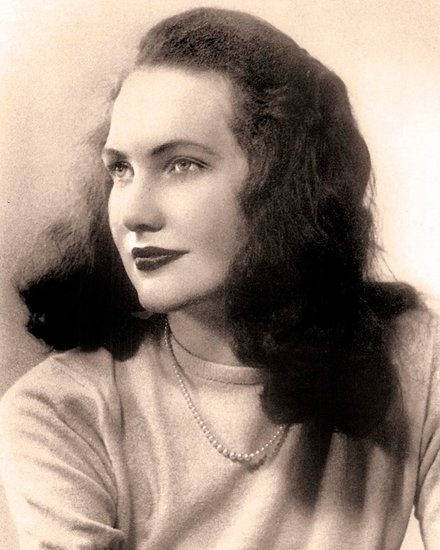
Hilda Moriarty

For Melissa Hale-Spencer

How often has it been said that, on St. Patrick’s Day, “Everybody’s a little Irish?”

There’s more than a wee bit of truth to that, in that it reflects the inclusive spirit the Irish show in their hospitality, especially for the poor, having been so very poor themselves not too long ago.

I feel hospitality in the lilt of the ways the Irish speak. Go to Connemara, Kildare, Kerry and any other of the 23 counties in the Republic, walk into their shops and look around, talk to people on the street, and you will hear a language that can only be defined as poetry, and poetry, as we know, is a mode of hospitality.

Historians say the poetic strain comes from the Irish having one of the oldest vernacular traditions in Western Europe — vernacular as in speech embedded in the tongue of the common people, which in the Irish often enough manifests itself in a wit spiked with barbs.

It’s not speech studied at a university, but words that fall off the tongue unconsciously because they are rooted in the soul. Barbed or not, the words are often filled with that beloved Irish sense of humor.

In his 90-minute interview with Mel Brooks — as part of his “Serious Jibber-Jabber” series — Conan O’Brien tells the greatest master of cinematic comedy in the 20th Century that he believed, growing up, humor and being Irish were one and the same, until he saw Jewish comics play with words in the most brilliant of ways: through irony, satire, and an anti-authoritarianism that took aim even at their own religious traditions. 

Mel responded that, when he was growing up, in a community of wall-to-wall Jews — his words — in Williamsburg Brooklyn, being a Jew and humor were one and the same. Gentiles? Mel says, “I don’t think they get it.” He said Jews were the champs when it came to making people laugh at the absurdities of life while conveying to all what is essential in living.

But then Mel adds that, when he ran into Seán O’Casey, Samuel Becket, Yeats, and the like, “I discovered that they were all Irish writers, James Joyce! the best fucking writers in the world and that not one of them was a Jew. I just had a nervous breakdown, I did, I mean I cried for about a month.”

I study the Irish every chance I get — I am an Irish citizen — and what grates on me still is the genre of Irish-American I described here years ago as “Plastic Paddies.”

Talking to one such Paddy not long ago who was waxing high about his Irish-ness, I said, “How wonderful you feel that way; who is your favorite Irish poet?” And the person stunned, retorted, “Poet? Why would I want to get into anything like that?”

I have my favorites of course — to stay with the subject of Irish poet — not only because of how they say things but what they say as well.

I love Heaney, Yeats, Boland, and Muldoon to mention a few of the heavies — Heaney’s obit in The New York Times came with a large photo on Page One above the fold! — but poet-wise my mini-Irish heart runs to the likes of Michael Hartnett, and Paul Durcan — who just died in May — and the head of my choir, Patrick Kavanagh. 

And it’s to Paddy Kavanagh of Inniskeen, County Monaghan, I’d like to call our attention this St. Patrick’s Day week, and to one of his most endearing poems, “On Raglan Road,” which the likes of Van Morrison, Sinéad O’Connor, Roger Daltrey, and a dozen other luminaries have sung — Paddy’s words put to the traditional Irish air “The Dawning of the Day.”  

Writer and broadcaster Benedict Kiely recalled in a 1974 interview for RTÉ (Raidió Teilifís Éireann, Ireland's National Public Service Media) that Paddy said he’d paired verse and tune while writing the lines. It’s said the great songster Luke Kelly was given the verse/song by the master himself, that very evening at The Bailey, the famed Dublin pub.

The story behind the poem is filled with a million ironies. 

In his twenties, Kavanagh came to Dublin straight from the farm to live, carrying a few poems and a minor rep as a writer in his overalls. 

The buckleppin’ Irish writer Brendan Behan, a native Dubliner with a big-time chauvinistic tude, couldn’t stand the oafish hayseed from the start, calling him — as Dubliners referred to folks who worked the fields — a “culchie.” 

And because Kavanagh sought out younger poets and artists in search of a community, Behan dubbed him “king of the kids” and for his sexual prowess the “Monaghan wanker.” The two were gas and fire so anytime Behan entered the front door of McDaid’s at 3 Harry Street in the city, Kavanagh darted out the back for his survival.

When it came to wooing the more sophisticated gals on Grafton Street, Paddy showed himself to be the poorest of oafs, his Venus a version of Mars.

And with respect to the poem in question, Paddy had fallen head over heels for Hilda Moriarty, a young Dublin lass interested in writing, but more importantly who was said to be the most beautiful woman in Dublin.  

Indeed, Hilda was called to Hollywood for a screen test but lost out to — you’ll never guess — Maureen O’Hara. Her Kerry accent might have been a factor but it was more because Dubliner O’Hara had been involved with the Irish stage since she was 10.

Kept at a distance by Hilda, Paddy stalked her, sometimes sitting in a café surveilling her as she and her girlfriends chatted away at a table nearby. This and the rest of Paddy’s life is found in the brilliant “Patrick Kavanagh: A Biography” by Antoinette Quinn, a work of genius itself.

On one occasion, while Paddy and Hilda were speaking about writing, she teased the culchie that all he could do was write about “cattle and sheep.”

Cut to the quick, Kavanagh boasted he could write a poem about a woman too, “In fact, I’ll write a poem about you!” From that came “On Raglan Road” in 1944.

Hilda not long after married Donogh O’Malley, a conventional man who held important government jobs such as the Fianna Fáil Minister for Education. Having given up thoughts of writing herself, Hilda became like her father, a medical doctor.

Many years later, the two met when Paddy was a skeleton of himself — he was 20 years her senior — they said hello and a final goodbye. But their love had not been forgotten. On the morning of Hilda’s burial in Limerick, in March 1991, the Taoiseach of the Day read Paddy’s poem of unrequited love into the record of the Dial, another act of Irish hospitality.

Kids in school still read Paddy’s work and even the least scholarly among them can recite his famed early poem “Stony Gray Soil,” where he explains why he lost his love to O’Malley.

The first stanza goes:

O stony grey soil of Monaghan
The laugh from my love you thieved;
You took the gay child of my passion
And gave me your clod-conceived.

Mel Brooks admitted without begrudgement that the Irish have a congenial way with words, and, if he’s heard “On Raglan Road” set to the “Dawning of the Day,” he knows the Irish have a way with a heartfelt song as well.

Luke Kelly’s rendition of the poem/song is grand indeed but this St. Patrick’s Day I recommend Declan O’Rourke and Glen Hansard’s version sung at the great fiddler John Sheahan’s 80th birthday party several years ago — Luke’s presence is there for all to see in images cast upon a screen, Irish hospitality at work again.

Here’s the song: https://www.youtube.com/watch?v=e05Xfys4wxg. Watch it and hear Paddy’s mournful plea.

And, as you do, I know you’ll feel a wee bit more Irish this St. Patrick’s Day; the video’s like a Lay’s potato chip, you won’t be able to watch it just once.

Therewith, Happy St. Patrick’s Day to all.
MIDDLEBURGH — On this 24th day of February, we OMOTM convened our old selves in Middleburgh at Mrs. K’s Diner, right in the heart of charming downtown Middleburgh, far from the madding crowd, which is apparently far enough from the Walmarts and the Lowe’ses of the world to still have some interesting independent businesses.

For example, the hardware store a few doors away from Mrs. K’s is worth touring even if you don’t need nuts, bolts, rakes, or shovels. Amazingly, a vintage pickup truck even lives up on the second floor.

Mrs. K’s has lots of seating for us, including a big round table near the front and a long table that seats most of us earlier birds. If you google Mrs. K’s, you find it is well represented on the internet, describing it as a homey atmosphere with comfort food served by friendly staff.

This certainly is true, and we are made to feel most welcome here. Our coffee cups are always refilled in a timely fashion by Carolyn, while Angela takes and delivers orders, with I guess Patty in the kitchen, though Patty is too busy preparing food to be visible most of the time.

Not today

Many topics are covered in these weekly gatherings, and it must be admitted that it is a challenge to be sure on what day what was said, but it is all important to disclose. It may have been last week when a story about a hammer vs. a wrench was told.

It seems a young man, now an OMOTM, purchased a hammer at a local store and returned it when the hammer turned out to be the wrong tool, and a wrench was needed instead. This was before Amazon returns, where no questions are asked and no personal interest is involved in the transaction.

The young man was questioned, and it seems rebuked, for his misguided purchase.

Another story was told regarding a local youth who was thought to have freckles until it was discovered that, while he rode in the back seat of the car and all the windows were down, the driver was in the habit of spitting tobacco juice out the window.

Can you think of anything in that story that would be consistent with the world we live in today?

Historic honor guard

One of our members with an old army vehicle belongs to a group of others possessing such remarkable memorabilia.

He reports that these folks and their memorabilia will be forming an honor guard escort for the remains of 44 Revolutionary War veterans recently discovered near Lake George where they will be interred on May 22.

You may note that some of these vehicles appear in the Memorial Day events in Berne, and elsewhere in our area.

Mourning zerks

Complaints have been heard regarding grease fittings, or rather the lack of them. Those who go back a few years will remember zerks everywhere on equipment of all kinds that allowed joints to be greased with a grease gun, whereas today, we have what are purported to be joints that never need grease. 

Nobody at the table was buying that notion. Hence, home solutions were discussed, one of which involved installing zerks where they are needed, which is just about everywhere a joint requires lubrication, contrary to contemporary marketing.

On the same subject, after discussing the high cost of repairs, it was concluded that lubrication was much cheaper than parts.

Tractors delight

Tractors, their love and care, maintenance, and many features and issues that require our special care and insights, rank high on the list of subject matter at these breakfasts.

The relative reliability of the older ones, even older than some of those at Mrs. K’s on Tuesday morning, was a discussion point. A Ford 9N and Ford 2N were lauded for starting perfectly in the spring even after a long winter of rest under tarps and snow.

Of special interest was a farm equipment sale some will attend in Syracuse later in the week.

Elder objections

Ubiquitous caps worn backwards rankle many an OMOTM. Several problems may exist with this habit adopted by the youth in our lives.

As an aside, a Greek philosopher is quoted as saying thousands of years ago that the youth of his day would never amount to anything, probably not due to hats, but something.

So this is the first problem suggested here: Us resisting that which is different and so suspect.

Second problem may be the utility of the habit. Does a cap work better when worn backwards? Do we need a government study to explore this notion?

The third explanation may be that we OMOTM object, so there is a motivation in itself. Even the Greek kids back 2,500 years ago needed to get their elders’ attention somehow.

Finding ourselves within spitting distance of the spring equinox and longer days and greening grass, yet still amid blowing and drifting snow, and with the lurking threat of more snow and ice, and appreciating the ambiance of  Mrs. K’s, in the splendid village of Middleburgh, so pleased to be renewing our acquaintances and sharing common hopes and worries, and awakening and refreshing old memories were Harold Guest, Wally Guest, Ed Goff, Robert Schanz, Mark Traver, Glenn Patterson, Joe Rack, Rich Albertin, Will Lickliter, Roger W. Shafer, Jamey Darrah, Roland Tozer, Frank A. Fuss, Rev. Jay Francis, Al Schager, Herb Bahrmann, Chuck Batcher, Warren Willsey, John Jaz, Gerry Cross, Dick Dexter, Jack Norray, John Williams - Scribe Emeritus, Lou Schenck, Elwood Vanderbilt, Bob Donnelly, Dave Hodgetts, Paul Guiton, Alan DeFazio, John Dab, Gerry Chartier, and me.