Archive » February 2026 » Columns

MIDDLEBURGH — On the 17th day of February, we found ourselves at the most southern of our breakfast hangouts, the Middleburg Diner, at the crossroads of Cotton Hill Road and Route 145, heading south out of Middleburg.

From the direction of Berne, you can take the roads over the hills which are either very scenic or very scary, depending on the season, or stick to the longer flatland route through Schoharie. Also, if you are prone to getting lost, on the over-the-hill route, you might like to know that you may lose GPS contact when you are at your most vulnerable.

This diner has a long dining room at one end, which seems just designed for us, with a long table down the middle that accommodates most of us, and a few smaller tables along the side for overflow or later comers. The regular Middleburghers have the advantage here of finding seating at the far other end of the diner where they can enjoy their breakfast in relative peace.

The dredging up of many past loves of the vehicular kind on this day included Kaiser Frazers, Henry Js, Hudsons, Crosleys, Nashes, and Metropolitans. Some were said to have evolved from World War II production lines, reverting back from making tanks to making cars again.

Hitchhiking advice

Further cementing the notion that there is much to be learned from OMOTM, came a very useful tip regarding hitchhiking, which may have been more common in earlier times.

Just standing by the road with a thumb out gives no explanation as to motives, and some might be suspect.

But if you can manage to have an empty gas can in your hand, you may get a lift more readily because your need is easily apparent and can be interpreted as harmless.

Verbal bologna

Bologna and how it should be sliced to please demanding customers at the deli counter gave rise to a further consideration. Verbal bologna was also found to be sliced thin or thick depending on the intent of the slicer or the interpretation of those on the receiving end.

Hilltown genealogy

Exploration of the genealogy of the Hilltowns always inspires speculations around the breakfast table as to who was or is related to whom. Some of us have few or no local relatives, and some are linked by expansive webs of relations.

It seems there may be only a few names it all started from, but the problems begin when some are called to admit to their heritage.

The uniqueness of some of our predecessors is a point of pride, as such characters are just not to be found elsewhere. It could be argued that a lot of this uniqueness survives to this day and around this table.

Harmony at home

Many of our discussions focus on maintaining harmony at home, and also with others and in other situations, of course.

As a guide to maintaining this pleasant state, and keeping in mind how to act when provoked, some of us have considered a list of rules. This is going to be similar to other such lists, but more localized and focused on everyday issues.

“Do not kill” seems obvious and is already covered by those higher-level lists, and maybe subject to copyright laws.

We propose for a first entry: “Stay in your own lane.”

This could perhaps be edict Number 2, given that somebody might come up with a Number 1 that has more gravitas.

Following up on the previous thoughts regarding the web of relations, a candidate for rule one might be, “Don’t disparage anyone since you can’t be sure who is related to whom. Also it just isn’t nice.”  Suggestions for other entries are welcome and will be considered, all in the interest of keeping order.

Plethora

In the discussion of those who are sick or very sick or in hospitals or nursing homes, it seems that there are many of these folks who concern us.

The operative word in this particular discussion was “plethora,” which might be a good word to add to our vocabularies if it isn’t already there.

However, there was yet another concern: Where is the accent in “plethora?”  Is it “PLEthora” or “pleTHORA?”

Not to beat this poor dead horse too much, but it has been suggested that folks who learned this word in conversation may be familiar with the first pronunciation, whereas those who learned the word from their reading, may have chosen the latter. Hence, a possible way to identify the readers among us. This at least distracted us for a time from the real worry about a seeming plethora of our ailing friends.

The right direction

The far reachingness of this column is hard to imagine on most days, but after a comment in a previous edition regarding the relative lack of appreciation in some circles for the heroic efforts of clearing snow, it was reported that yet another spouse has recently taken pictures of an OMOTM clearing snow, expressing, it would seem, recognition of this heroic effort.

This was just to acknowledge a step perceived to be in the right direction.

The Scribe made the comment on this day that new material for this column was always welcome, and indeed, it is. This precipitated an avalanche of amazing insights and observations, some of which will have to keep for a later date.  

Enjoying the warmer weather, but now anticipating ice and slushy driveways, and finding the long room at the Middleburg Diner a great place to share great memories and the exploits of long ago, were Harold Guest, Wally Guest, Ed Goff, Miner Stevens, Will Lickliter, Frank A. Fuss, Robert Schanz, Roland Tozer, Rev. Jay Francis, Al Schager, Warren Willsey, Gerry Chartier, Chuck Batcher, Lou Schenck, John Jaz,  Jack Norray, Gerry Cross, Dick Dexter, and me.

Sally Gray

The late Sally Gray, my mother-in-law, used lard for her pies. After I had the pie Sally made for me and her daughter, my wife, at our home on one of her visits, I exclaimed, “This is the best pie I ever had! I want the recipe!” For obvious reasons, this column is dedicated to Sally Gray.

Not surprising to some, a short while back, I had a big debate in the baked-goods aisle at our local supermarket for longer than I wished with a woman who, while I was looking for several baking products, bemoaned not being able to make good crusts. She was looking at Flako.

I told her I could make her a star; she listened but then like a doubting Thomas retorted, “An egg? Are you sure? And a lemon? I don’t want an acidic pie crust! I’d rather have the box.”

I tried to explain; in a few moments I walked away shaking my head and she hers in the other direction; me muttering to myself: “Lady, good luck with your ‘delivery system’ pie crusts.”

By the by, if you are forced to use store-bought crust, Bon Appétit says that tests in their kitchen had the best luck with Pillsbury-brand refrigerated pie crust.

I have looked into more than a few 20th-Century cookbooks to see how chefs/bakers worked with their dough and what ingredients they used. I saw chefs recommend adding vinegar to the water to be added to the flour mixture.

This I have tried myself with good success, using white or appley cider vinegar. Epicurus, as some other recipe sources say, also recommends using a small amount of baking powder to work with the vinegar and give the crust a  more airy texture.

Rose Levy Beranbaum, in her “The Pie and Pastry Bible” (Scribner, 1998) also calls for cider vinegar — and also baking powder. To me this is risky because the powder sometimes works faster than I would like.

Some bakers recommend the use of several tablespoons of vodka instead of the same amount of water (or vinegar or lemon in our case). In the case of crusts, as said, the aim is to cut down on the gluten that forms because that is what makes the crust “tough.”

Since alcohol and lemon and vinegar inhibit the formation of gluten, you can make wetter crusts that are easier to work with. Of course, the taste-effects of the alcohol, lemon, or vinegar are burned off and no residue of same remains. The beaten egg gives the crust a more golden look and a more pastry-like taste.

When I make pumpkin pies and need two crusts, or a fruit pie that requires a lattice top, I often make dough for three crusts. It is not a waste; the dough rolls out better; there is more to work with and thus easier; there is a thickness to the crust that lies on the glass plate that gives the pie crust more body but beware that it is not too thick.

This is not a crust that people leave on their plate as you often see when folks eat out the fruit (or whatever the filling) of a pie leaving the crust behind.


Denny Sullivan’s

Unbeatable Pie-Crust Recipe

Passed Down From Sally Gray

How to Make

Pastry-like Pie Dough

And get yummy responses from

your family, friends, guests, and even pets.


THE YIELD

This recipe makes dough for two nine-inch pie crusts. You can halve it to make one nine-inch crust. This is essentially the recipe one might find in a basic cookbook such as “The Joy of Cooking.”

THE PROCESS

Sift together:

2 cups all purpose flour

1 teaspoon of salt

MEASURE (then add to the flour mixture):

2/3 cup chilled shortening like Crisco or lard

2 tablespoons of chilled butter cut into small pieces

WORK

Work the shortenings into the flour with the tips of your fingers until the pieces are the size of nickels or dimes; the pieces of chilled butter will take a bit of effort. The CIA recommends this method, cf. infra.

COMBINE (in a measuring cup)

5 tablespoons of water

juice from one lemon

one egg beaten

MIX

Mix the water-lemon-egg liquid into the flour mixture in a bowl using a fork until all or nearly all the pieces of dough form somewhat of a ball. Gather the pieces together and form a large ball.

PLACE

The dough onto a lightly-floured baking board and cut the ball in half; flatten both pieces to the shape of a hockey puck. Do not over flour.

WRAP

Each piece of dough in a piece of wax paper or plastic bag and put into the fridge for at least 15 minutes. Dough chilled out this way rolls out much easier but, maybe more importantly, chilling the dough allows time for the gluten strands in the flour to relax

TAKE OUT

The first piece of chilled dough and roll it out into a circle larger than the pie plate. Trim the edges so that the dough is circular. Gently fold the dough in half and place it in the waiting pie plate. You can watch Youtube sites to see how this is done. There are several ways to do this, some bakers swearing by one method versus others. NOTE: Roll away from the center,  do not roll back and forth; the dough will eventually stick to the pin.

ADD

In the pie, that is, place the fruit or other ingredients for your intended pie (e.g. apples, cranberries, and walnuts).

ROLL OUT

The second piece of dough like you did with the first and place that across the top OR cut the dough into thin (or wide) strips for a lattice pie top.

RECOMMENDED

You might consider putting the ready-to-bake pie in the refrigerator for 10 to 15 minutes to help keep the gluten in check.

ANOTHER NOTE

Chilling the dough before it is rolled out (and the ready-to-bake pie afterward) has to do with gluten and moisture. Again, the chilling allows the gluten to relax which allows for a flakier crust. It also allows available moisture to find its way back into the dough.

Around 13 years ago, my beautiful and talented wife, Charlotte, asked me to accompany her to a doctor’s appointment. Prior to that, the only time I had been to a medical appointment with her was to look at ultrasounds of my kids.

I knew something was up. Sure enough, that day we learned that my wife had breast cancer. Our lives have not been the same since.

My reaction to this news was, basically, to ignore it. Don’t misunderstand. I know what the diagnosis meant, but my mind couldn’t understand how someone so full of life could have this horrible disease. She was and is so integral to so many as a friend, daughter, sister, mother, grandmother, and wife that I simply had no way to accept that we could lose her. I still can’t.

Fortunately, she got diagnosed early. If I remember correctly, it was Stage 1, or at most Stage 2. A regimen of chemotherapy was prescribed. This is where powerful drugs are administered in the hope that they will kill the cancer cells, without killing you at the same time. If it sounds brutal, it’s because it is.

When you go to a cigar lounge, there are plush reclining chairs where you can sit in comfort while enjoying a nice smoke and maybe a beverage or two. The place where Charlotte went for her chemo had those same comfortable chairs.

The difference was, instead of sports on the TV and posters of movie stars on the walls, there were tall racks holding bags of chemicals being injected into somber-looking folks who were just hoping for another chance at life. The word that comes to mind when describing the infusion center is “sobering.”

Once the treatments started, my wife’s hair fell out. Still, she remained beautiful. Then my parents were going to visit. I asked her if she’d wear a wig while they visited.

She said, “I’m not going to wear a wig in my own house!”

Duh. I eventually catch on, but it often takes me a while.

She was supposed to have four of these treatments. However, after two-and-a-half, it was obvious the chemo was killing her. She developed neuropathy, which is a loss of feeling, in her feet. She still has that to this day.

That’s one reason she gave up riding conventional motorcycles. How can you balance a 500-pound motorcycle at a stop light if you lack feeling in your feet? The good news is she now has a Can-Am Spyder, with two wheels in the front and one in the back, so we can still go riding together.

At some point, the doctors pronounced her “cancer free.” For a while, when people asked me how she was doing, I’d say she was “cured.”

When I said that she, ahem, vociferously let me know that there is no such thing as being cured of cancer. This is because the big C can come back at any time in other parts of your body, like your bones, your pancreas, even your blood. So it’s something you just have to live with.

Now here’s where the story takes a turn for the better. At some point in her cancer journey, Charlotte realized there must be other women who A, had cancer like her and B, wanted to grow in their Christian faith, also like her.

So she formed a group called In His Presence. The basic thing these ladies do is get together weekly for Bible study. Then, when they find out someone has cancer, they prepare a card for the person.

I’ve never seen one of these cards, but I know they have some scripture, some cancer-support information, and multiple signatures. These signatures are like “Mary, five-year survivor,” “Janet, 10-year survivor,” etc. Simple, yet utterly brilliant.

Sometimes someone will call our landline, looking for Charlotte and I answer the phone. Several times it’s been someone who received one of these cards and wanted to thank her.

I’ve had women and even men on the phone, in tears, telling me how moved they were that somebody cared enough to think of them and mail them such a lovely card. I’ve been told that those cards never leave their purse or wallet. Really. That’s how great an impact it had on them.

Over the years, I’ve gotten to meet quite a few IHP ladies. Without doubt, these are some of the smartest, full-of-life, and enjoyable people I’ve ever met. Mind you, I’m meeting them when they have cancer, yet they are still so upbeat and positive. Incredible.

There was one lady, I forget her name, who was an artist living in Pennsylvania. Charlotte made it such that we would pick her up from her doctor’s appointment and then go out to lunch. Here is a lady full of cancer, yet strong enough to keep fighting and at the same time be as charming and beautiful as you could be under such circumstances. She passed away not long after. I’m glad I got to meet her.

There was another lady from Pennsylvania named Mary. She was a little sparkplug of a woman, so strong and full of energy, despite the cancer. This lady, three times a week, would drive from Pennsylvania to New York, then take a bus, then take a subway to Memorial Sloan Kettering cancer center in Manhattan, where she had all kinds of appointments.

That long journey would be arduous even for a healthy person. When she told me she no longer had the strength to take a jar of pickles out of the fridge for fear of dropping it, I felt like crying. She passed not long after.

There’s another lady, also from Pennsylvania, who has been with the group for a long, long time. She had us over for lunch one time. I asked her how much being in IHP has helped her on her cancer journey.

She replied, “It has made my life one-thousand percent better.”

Wow. Even Disneyland doesn’t get that kind of review.

Finally, I have to tell you about Maxine. She fought cancer for a long, long time. She was an elegant and beautiful woman, truly. I had the pleasure of hearing her deliver a sermon at church once. She was so full of love and faith it was contagious. She leaves a loving husband and family. I’m so glad I got to know her as well.

When I try to compliment Charlotte on founding IHP and her hard work in keeping it going, she always says “It’s not me; it’s God.” She simply will not take any credit. Currently I’m serving on the board of IHP. The other board members are just terrific. It’s great to be a part of this in some small way.

Over the years, men have tried to join, but the one big rule remains to keep it women only. At first, I didn’t understand why.

Then I got invited to lunch on a visit to Double H camp in Lake Luzerne for cancer patients that the legendary actor Paul Newman founded. During lunch, the ladies were talking about some really intimate female cancer problems.

That’s when I knew Charlotte was right in keeping it women only. Women deserve respect, privacy, and dignity in such delicate matters, period.

If you know of anyone with a cancer diagnosis, let me know their contact information. I’ll make sure IHP gets a card out to them. Prayers will be forthcoming also. IHP continues to make a difference for people with cancer. May they continue to have the strength and determination to keep it going.

One more thing: IHP is officially registered with the state of New York as a not-for-profit organization that can accept donations. If you are looking for a cause that can help fight the scourge of cancer while making a definite positive difference in people's lives, consider donating to IHP to help pay for cards, postage, etc.

They have mailed out hundreds if not thousands of cards at this point and cancer isn’t letting up any time soon, so anything helps. Thanks for your consideration.

Cancer sucks. Thank God In His Presence is there to help.

NEW SCOTLAND — On this 10th day of February, while we pondered weak and weary, oops, that regards a bird of a different feather. We ventured out to the eastern-most of our breakfast rendezvous, the Windowbox in Slingerlands, sort of across the road from what many locals may remember as the cow house, where cows lazed easily and contentedly on the porch of a house that may have been grand in its day, but was for years enjoyed only by cows.

Bob and his crew, most notably Mariah, who took our orders and served us with grace and charm, welcomed us past the window box, which does exist, true to its name right as you step in the door.  The box does seem to be lacking flowers at the moment however.

Some reaction was received regarding comments last week about OWOTM as opposed to OMOTM.  Comments ranged from “good idea” to “bad idea” depending on the interpretation.  This is a spot from which you can only dig yourself in deeper, so probably best to let it lie. To mention sleeping dogs at this point may be highly inadvisable.

Connoisseurs

This next commentary is only to acknowledge the existence of the conversation, but we OMOTM are indeed connoisseurs of sorts of breakfast restaurants, though our main interest is in greeting the day with friends, seeing who survived the week and in what condition, etc.

Back to connoisseuring, some elements of judgement are heard to be, of course, prices, quality of various food items: for example, home fries, which are very good at the Windowbox. Also up for comparison are: pancakes, sausages, links or patties, fluffy eggs, seating arrangements, echo or not for less-than-high quality ears, and speed and efficiency of coffee delivery.

In the interest of preserving the welcome that we receive everywhere, no valuation attempt will be made here. I venture to say, in the interest of keeping the peace, that all of these quality points probably average out quite well over our venues; somebody has fluffier eggs, but somebody has crispier sausage, and back to letting the sleeping dogs lie.

Winter weary and winter wear

Unless the scribe missed it, there was no mention of Groundhog Day last week. Phil was said to have seen his shadow this year, indicating six more weeks of wintery weather are yet to be faced. Having endured as much as we have at this point in our journey, perhaps a little more or less winter is low on the issues that upset us, plus there was that winter of  ’56, or some such year, which upstages all winters forever.

Two of our number are seen some days lately to be wearing amazing, room-dominating, coon-skin hats, totally appropriate to the season. These hats are huge and beautiful, and really should receive a fanfare when they enter the room!

Teaming with topics

The Super Bowl did not seem to cause much excitement for the group; however, there were mixed and more excited reviews of the half-time show. Even the alternate half-time show got some honorable mentions. The conclusion might be that we are more enamored by local attractions.

The subject of attention to dental requirements, appointments, expenses, and insurance was on the table, along with ice, and boy do we have a lot of it to contend with, and boy is it threatening. We do not slide so gracefully over and around it as we once might have.

Vintage 1860s local maps were brought to breakfast for inspection. Few of the homes we see today were on the maps, but it was most interesting to see which homes and buildings existed back that long ago. You could take a stand on either side of progress, but we do need to live and shop somewhere. The deer and the bears and the coyotes who once had so much openness to enjoy were not consulted for their opinions.

There was an interesting view put forward regarding the relative cost of heating with wood versus oil.  Maybe somebody will or has done the math on that. They say wood warms you repeatedly when you consider all of the exercise involved in bringing it all the way to your stove. Cutting, hauling, cutting, splitting, chopping, hauling, stacking, loading, ash removal, etc.

A detailed study was undertaken by one of our number regarding the volume of requests for donations received from various not-for-profit organizations. On the as-advertised merits of these requests and the appealing bribes, stickers, cards, address labels, even pictures of worthy recipients, you may only be able to resist based on the sheer unaffordability of the appeals.

A popular recognition was made regarding the enormous value of keeping spouses happy. It was heartily concluded that this was very important and a priority, to be overlooked at your peril.

Enjoying the slightly warmer weather, but still enduring the lingering ice and snow, and finding the Windowbox a great place to meet, greet, eat, and share our many challenges, successes, and well, let’s leave it there, were Harold Guest, Wally Guest, Roland Tozer, Marty Herzog, Frank A. Fuss, Will Lickliter, Ed Goff, Rich Albertin, Chuck Batcher, Robert Schanz, Rev. Jay Francis, Al Schager, John Williams, Lou Schenck, Warren Willsey, Bob Donnelly, Dave Hodgetts, Jake Herzog, Jack Norray, John Jaz, Gerry Cross, Paul Guiton, John Dab, and me.

PRINCETOWN — On the third day of February, the OMOTM descended on the Chuck Wagon Restaurant in Princetown, which was, by the way, operated from 1956 to 1976 in Champaign, Illinois, now complete with the diner’s original sign. As is his usual custom, Ron greeted us with a smile and lots of coffee, and Chris took our orders and delivered them with amazing speed and accuracy.

We enjoy a welcome at all of the restaurants we frequent, but the locals do suffer from being pushed to the sidelines in favor of our overwhelming numbers and our boisterous enthusiasm to greet the morning and each other. A certain consternation may be seen on the faces of some of the displaced who were hoping perhaps for more peace and quiet in the company of the more regular patrons.

OMOTM or not, diners in the mornings seem to be dominated by old men. It makes you wonder where the old women are. Are they happy to see us off and out of their hair for a spell, or do they not like breakfast? OWOTM, where are you, and what is your position on this?

Heroes clear snow

In regard to what we OMOTM agree are heroic efforts to make walkways and driveways navigable, there are significant strategies to this operation. Snowblowers, plows, pickups, tractors, shear pins, where to put the snow, how to keep the banks under control so they can be ready to accept the next snow.

A handy tip emerged from this discussion about waxing snowplows or blowers to allow snow to slide to the side with more ease.

Our expertise and equipment varies from shovels to big dump trucks, but one thing we noted was a typical response from those who are shielded from all this valiant effort.

“I got the driveway cleared.”

“OK.”

“OK?”  St. George slayed a dragon and received years of acclaim. Isn’t clearing the driveway on that level? We’d like to think so.

One exceptional spouse was said to have taken pictures of her guy in this heroic role, an attitude which would be nice to encourage.

Taking names

In order to give credit where credit is due, we pass around a paper and pen for all of us old attendees to jot down our names as best we can recall and write them. Wives and significant others want to know if we really went to breakfast, or what have we been doing on Tuesday mornings?

There has been a humorous side to this listing of names where such folks as Ernie Banks and Gary Burghoff have found themselves listed. Whereas this seemingly provides the perpetrators of the fraud with great joy, it is a challenge to the scribe to ferret out the deceit.

On the other hand, if some name slips through, how would we prove Ernie or Gary weren’t there?

Barbering

Hair is a subject that some of us show less and less interest in as time goes on, but it still needs some attention. Where and when the attention occurs is sometimes on the Hill and sometimes off the Hill, some more or less personal.

The general consensus was that hair is a good thing, but our needs are more basic, as the emphasis is now on real important functionality, though we suspect vanity could still play a role here for some.

Scholars of history and apricity

More than one OMOTM has been heard to ask, at the end of breakfast, “Well, did you learn anything?” 

And actually that is a good question, because the likelihood of learning something on Tuesday morning is pretty good.

History is what we are best at, that and how to repair historical things like old cars and old plumbing.  The subject of old plumbing can get pretty personal, so perhaps we’ll leave that for another time.

Back to history, it is interesting to note, for example, how many gas stations, convenience stores, bars, dairy farms, and churches there were when we were in our youth, and when the economy was more local.  

The economics are puzzling, though the success of this may have been in shorter commutes to places like Walmart, lower profit expectations, and higher expectations of personal service. Some gas-station owners, for example, were known to live above the station, and emerge whenever needed to provide service with a personal touch.

On the subject of learning, “apricity” could be the new, though a bit archaic, word of the morning, and relevant to the slowly changing over of the seasons. This refers to the warmth of the sun in winter. Used as appropriate for this morning, “This Tuesday dawned with grudging apricity.”

Braving the grudging apricity and the bright crunchy snow and cold and the early hour, and enjoying all the Chuck Wagon charm and the wisdom of our ages, were: Harold Guest, Wally Guest, Ed Goff, Roland Tozer, Chuck Batcher, Warren Willsey, Rich Albertin, Will Lickliter, Frank A. Fuss, Jamey Darrah, Lou Schenk, John Williams, Herb Bahrmann, Paul Guitan, Jack Norray, John Jaz, Jerry Cross, Dick Dexter, Bob Donley, Elwood Van Derbilt, Dave Hodgetts, Ted Feurer, Jake Lederman, Mark Traver, Joe Rack, Glenn Patterson, Roger Shafer, Pastor Jay Francis, Al Schager, Robert Schanz, and me.

Most people today will likely tell you they don’t really feel well represented by our current two-party-oligarchy-owned quasi-democratic quagmire. I think that, unless you’re a billionaire, a racist, a misogynist, a pedophile, or a murderer, that’s probably pretty true.

Even in our little village you can always count on a certain elephantine party always supporting further development despite the wishes of the actual voting public. 

So, in order to fix this lingering hemorrhoid of a problem, I would like to suggest a few ideas for new parties. Maybe we could end up with a system like the folks in Canada, Great Britain, or most other actual western democracies where various parties actually work to represent actual voters.

First up would be the Food Party. This party would focus on the idea of providing a steady, affordable diet of clean, healthy quality food produced by small family farms as opposed to the polluted, overpriced and substandard food we currently get from big Ag.

The Food Party would also focus on expanding SNAP [Supplemental Nutrition Assistance Program] to help the needy and doing away with the current onerous system. Nowadays, a family must fill out copious paperwork on a yearly basis that proves they qualify as well as supplying enough personal information to set them up for identity theft for life.

The next new party would be the Sisterhood or Women’s Party. It would focus on women’s issues, but would be open to both men and women who support things such as a right to access reproductive healthcare.

They would support equal rights for women, equal pay, equal educational opportunities and maintain the right for women to vote, despite the efforts of Peter Thiel, who feels women should not have that right. The party would also focus on the rights of women to not be raped, murdered, abused, and exploited since the current two parties seem quite content to let that continue. 

Another new party would be the anti-organized religion party. Their focus would be on keeping organized religion out of politics and public life in all ways. They would also focus on firmly establishing the principle of having no official religion in this country.

They would work to outlaw the concept that our country was founded as a nation aligned with any religion, when, in point of fact, the founding fathers were quite specific in not aligning with any church. Another part of the party’s platform would be to tax all religious orders, churches, temples, mosques, and satanic worship circles as is done in many other western nations. And finally, the use of any religion to hurt, denigrate, demean or unfairly target any group would be strictly outlawed.

The Dog and Cat Party would be a welcome addition to the group. The focus here would be on protecting the rights of animals, outlawing the practice of animal testing and setting national laws for such things as animal abuse, puppy mills, and reining in the out-of-control pet industry. There would be controls on veterinary care just like there should be for human medical care.

At this moment in time, having a pet is becoming untenable for more and more people simply because vet care is getting unaffordable. The only problem is that, in this party, the cat people and the dog people need to work to find common ground. At the last meeting, the cat people knocked all the proposed legal documents on the floor while the dog people were crowded around an iPad looking at puppy videos.

My final suggestion would be the Human Party. This party would focus on preserving the dignity, safety, health, and happiness of all human beings. They would work for laws that outlawed the unchecked accumulation of wealth by individuals past the $10 million level. They would establish standards for wages that allowed anyone working a full-time job to earn enough to live a safe and decent life.

They would help establish universal healthcare so nobody would ever go bankrupt from simply becoming sick. They would work to outlaw the ownership of housing by corporations and hedge funds. And finally, they would enact laws that would prohibit all convicted criminals from ever holding public office. Lobbying would become illegal as would all political contributions over $100. Ironic that we’d need a specific party to do the job that should be at the center of all decent, honest political parties. Wait, is that an oxymoron?

As you can see, there’s lots of room for new parties since the current two only address the needs of rich old white men. Both parties hate people of color, women, and the poor since both parties have worked tirelessly to maintain the status quo for decades.

Oh, I know what you’re thinking: “He’s just a cynic.” Very true. I am. But I’ve also been a registered Democrat and voter for my entire adult life. While I do believe the Democrats are far better than the current iteration of the GOP or American Nazi Party as it now operates, they’re still far from where they should be.

Politics has always been called a dirty, corrupt business and that’s more a reflection on our dying late-stage capitalist hellscape. When I was younger, the two parties were capable of working in a bipartisan fashion to help the common man.

Once Citizens United opened the floodgates of dark money, all politics became dirtier than the pile of adult diapers outside 1600 Pennsylvania Avenue. We can fix our badly broken system, but it requires much higher levels of voter turnout and a new generation of candidates who truly understand the concept of public service as opposed to private enrichment. Of course, the midterm elections would provide a great opportunity to turn a corner. 

The only problem is that the regime in Washington has its eye on making sure those elections don’t happen. Not a very democratic attitude coming from the “law and order” party.

Editor’s note: Michael Seinberg describes himself as an ex-journalist, professional cynic, and enraged American citizen looking for change so his grandchildren will have a chance at a decent life.

In 2000, when I sent the completed manuscript of my “Restorative Justice: Healing the Foundations of Our Everyday Lives” — written with long-time friend and colleague Larry Tifft — to publisher/editor Rich Allinson of Willow Tree Press, he said he was ready to go to press but still had a question about a phrase we used several times: “the political economy of relationship.” 

It’s not the time here to explicate our full response to his query; suffice it to say for now that it refers to the governing principle that defines one person’s relationship to another, the conceptions of value he has of the other — whether it be a person, group, or nation — and the principle is deeply embedded in the psyche.

Such conceptions are part of a mental framework whereby we classify others, and devise rewards and punishments for behaviors that jibe with the directives of our ordained hierarchy; it’s a gestalt of sorts and a measure of a person’s moral depth.

When the framework is warped or tilted or off kilter, the assessor’s behavior tends toward the evil part of the good-evil spectrum, manifesting itself in words and behaviors that dismiss, demean, minimize, or otherwise mock the value of the other.

Those who prescribe to such — shall we say — evil, try to obfuscate by couching their words and actions in a propaganda that affords them (the appearance of) cover while shooting salvos at any person, group, or nation they define as inferior and unworthy of human consideration.

The end goal of the evil-minded soul is to tie up, confine, hem in, enslave the other for self-aggrandizement, and the payoff can come in a variety of ways: money, prestige, sex, and any other variable that helps solidify the power complex of the evil-minded soul.

In our Civil War, which lasted from 1861 to 1865, the disagreement was over whether white people had the right to own Black people, use them as slaves on plantations without rights, pay, dignity, or a future of value. In the case of Black women so enslaved, it meant the owner of a plantation had sexual dibs on them anytime he wanted. 

The most talked-about example of such enslavement today is Jeffrey Epstein and his accessory to the crime — Ghislaine Maxwell — of operating a plantation for enslaved teenage girls and young women for their sexual pleasure and the sexual pleasure of a cadre of rich and powerful clients who contributed to the finances of their empire. On that plantation, no sugar cane or cotton or coffee was harvested but orgasms (limitless).

Keep in mind that “conceptions of other” is structural and why they have such a powerful effect on behavior; and why so many people went nutso over the Black Lives Matter movement because its main focus was not the working conditions of the Black porter in the galley of an Amtrak train but the underlying structural framework of racism, the steel that defines the structure of one’s ethical framework.

Thus, in the hierarchical ordering of races and ethnicities white people assign greater value to themselves than to people of color, a disease diagnosed as white supremacy.

Women are well versed in how value is assigned to genders and sexes because historically men with power and money, who control access to reward systems, assign greater value to themselves than to women — as is happening right now as sexually-straight (white) men enforce a value system that assigns greater worth to themselves than to their lesbian, gay bisexual, transgender, and queer neighbors. 

In his 2018 manifesto “Winners Take All: The Elite Charade of Changing the World,” the veteran journalist Anand Giridharadas challenged whether those in “the corridors of political power, should be allowed to continue their conquest of social change and of the pursuit of greater equality.” 

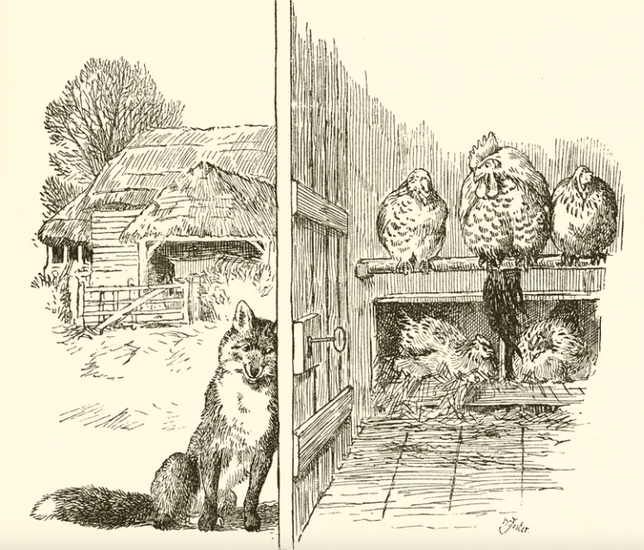
He assured us, “The only thing better than controlling money and power is to control the efforts to question the distribution of money and power. The only thing better than being a fox is being a fox asked to watch over hens.”

When efforts are made to question or dismiss or minimize the reality of someone else’s pain and suffering, define it as fake news, then Orwell’s 1984 has come.

As a Great and Powerful Wizard was exposed as a fraud when Toto pulled back the curtain in the throne room of Oz, so now the current President of the United States is bereft of any redeeming psychological, philosophical, or religious value having supported Nazi-like ideologues like David Duke and Nick Fuentes, and after taking away the life-supporting aid the U.S. Department of Agriculture made available to the poor through its Supplemental Nutrition Assistance Program (SNAP).

Then there’s the gasoline he kept pouring on the flames of “birtherism” accusing Barack Obama, running for president, of being an alien. How he gloated in 2010 when Joseph Farah’s WorldNetDaily filled a 14 x 48 foot highway billboard in South Gate, California displaying his hidden hate in giant capital letters: WHERE’S THE BIRTH CERTIFICATE?

In her memoir “Unhinged,” Omarosa Manigault Newman, a White House adviser to Trump said, when he hosted the TV show “Celebrity Apprentice,” he frequently used the N-word and that tapes of the show have proof.

And, though she says she herself never heard him say it, she knew “Using the N-word was not just the way he talks but, more disturbing, it was how he thought of me and African-Americans as a whole.”

The current president could not shake the fact that someone he would use the N-word to describe, with degrees from Columbia and Harvard Law, who ran the “Harvard Law Review” was going to be a president of our United States.

Which gets us to the point of all this. Last Thursday, Mr. Trump through his propaganda machine shot into the stratosphere images of the former president, Mr. Obama, and his wife, Michelle, as apes, gorillas, niggers, while the once popular song “The Lion Sleeps Tonight” played in the background of gorilladom.

It was the KKK in a 21st-Century disguise shrugging off the pain of anyone hurt by it as “Fake Outrage.”

As a country unhinged by current civil-war-like conditions — incessantly fueled by Mr. Trump — far too many ordinary citizens, just regular folk, fail to realize that everyone in a nation so besieged must engage in deep self-analysis. In her 1942 classic “Self-Analysis,” the great psychoanalyst Doctor Karen Horney offered a method whereby people can face up to their complicity in, shall we say, evil.

An article in the Oct. 10, 2024 issue of “The Conversation” drew attention to “Why Trump accuses people of wrongdoing he himself committed — an explanation of projection.” And projection, as we know, is a neurotic affliction whereby a weak person unconsciously attributes his own unacceptable feelings, thoughts, or traits (like jealousy, insecurity, or anger) onto someone else — persons or groups — instead of self-analyzing where the governing principle of such fascism resides.

In a fraud case against Trump University in San Diego in 2016 the aforementioned Mr. Trump said the presiding judge, Gonzalo Curiel, hated him: “I have a judge who is a hater of Donald Trump, a hater” because Curiel was “Hispanic,” a “Mexican.”  

His conceptual gestalt had Judge Curiel in a corral with all the other Mexican rapists just as he had classified the Obamas and every African American on earth as an ape or gorilla.

Occam’s razor in cutting to the chase of logic says a swamp cannot drain itself. If you were put on the stand in a courtroom right now and were asked to describe the governing principle you live by and how that came about, who would you describe as unworthy of human consideration?

DELANSON — On this 27th day of January, the day after the cleanup from the about 20-inch snowstorm, the OMOTM put in a strong showing at Gibby’s restaurant in Delanson. Gibby’s has been opening on Tuesday mornings for us even though they aren’t normally open on Tuesdays.

Kudos also to Gibby’s for the beautifully cleared out parking lot ready for us at 7 a.m. Accommodation and food were also great, as usual. While we’re on the subject of Gibby’s, it should be noted that the new owners have kept the look and feel of the place the same as it has been for years, a smart move since so many people have loved it for so long.

I’m not sure how I got this scribe job, but one important part of the appointment surely is that everybody else is happy with coming out to eat with friends on Tuesday mornings but doesn’t want to be worried about recapping the event later.

I’m viewing this first foray as scribe as a trial for me, and an opportunity for the rest of the OFs to decide that they would be better served by someone else taking a stab at this. Don’t everybody line up at once.

Avoiding turbulence

A general observation I would make about our 30 or so OFs who gather every Tuesday morning is that this is a crew that shows great restraint to avoid controversial topics that could be divisive. A few times I have noted somebody venturing into turbulent waters, but it quickly becomes apparent that this is a blunder, and a retreat is quickly enacted, to the relief of the others.

We are blessed by some very talented wait staff who make allowances for our shortcomings.  One shortcoming we do not have is a general goodwill, which we show to each and all.

But we are a little short of memory and also hearing, so our servers have to take a lot of responsibility for what we ordered and who ordered it. Not only is it likely that we don’t have a clear memory of what we ordered, but then hearing what is being delivered can be a little muffled in our old ears.

Who ordered, “blah blah blah?”  “What?” etc. This came to a head a couple of years ago when a waitress did not understand the issues, and we experienced stress over who ordered what. This particular crisis is still remembered by many.

Some of us arrive on Tuesdays one at a time, but some carpool. Now carpooling is fun and convenient, and sometimes necessary, depending on driving skills and whether or not you have good tires on your car, but it does restrict you to whom you sit with and converse with.

Coming as a onesie means you may mix with others you don’t know so well. This can be a great experience. I’ve observed that everyone at the breakfasts has much to share after so much of the experience of living.

Solving problems

Some of us OFs are seen to be saving Tuesday mornings as a resource. For example, if you don’t know how to approach a rough running engine or a leaky faucet or perhaps a tractor that needs overhauling, this is the place to be.

There will be great enthusiasm in solving some of these problems. You may get conflicting advice, but certainly a lot of food for thought to supplement the food for breakfast.

One area that was explored on Tuesday morning was chicken and turkey management. Conflicting views had chickens seen as smart, the other as not so smart.

I think the not-so-smart view dominated, with a recollection of one particularly early-morning rooster meeting an untimely end, rewarded for his enthusiasm for greeting the day too early once too often.

A turkey was also credited with chasing a mail carrier down the road, thinking the mail in her hands was food. Refuge was found in a passing car.

Another topic of the morning was a popular outcry, railing against the self-serving nature of big business; in this case, specifically, in the mileage of vehicles. 

It was generally agreed that better vehicle mileage could have been achieved through technology, which would have served motorists, rather than the industry that profits from us spending our hard-earned wages liberally. Thus, the group’s assertion that this technology has been repressed.

Braving the snow and cold and the early hour, and enjoying all the Gibby’s ambiance and the wisdom of our ages, were:  Harold Guest, Wally Guest, Will Lichliter, Rich Albertin, Robert Schanz, Chuck Batcher, Warren Willsey, Roger Shafer, Joe Rack, Mark Traver, Pastor Jay Francis, Jamey Darrah, Frank A. Fuss, John Dab, Paul Guiton, John Williams (Scribe Emeritus), John Jaz, Lou Schenck, Jack Norray, Dick Dexter, Gerry Cross, Alan DeFazio, Elwood Vanderbilt, Dave Hodgetts, Bob Donnelly, and me.