State issues roadmap for dealing with harmful algal blooms
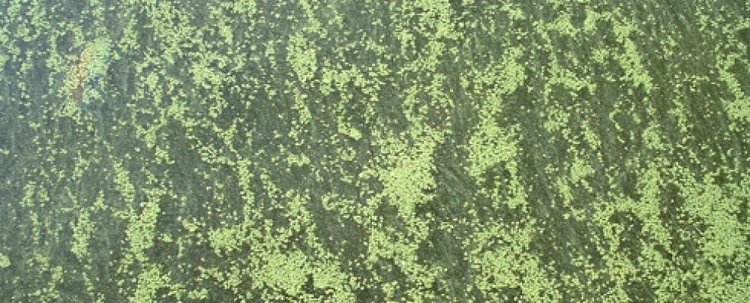
— Photo from NYSDEC
Harmful algal blooms may look like green dots, clumps, or globs on the water surface, pictured above. They may also look like pale streaks; like pea soup; or like blue, green, or white spilled paint on the water surface.
The state has released a roadmap to deal with harmful algal blooms, known as HAB.
The 11-page report says that HABs in freshwater consist of cyanobacteria, which are also referred to as blue-green algae.
Cyanobacteria are billions of years old and are naturally present in waterbodies in low numbers. Several types of cyanobacteria produce toxins and other harmful compounds that can pose health risks to people and animals.
The roadmap is to inform management efforts, both short- and long-term, across the state and also to serve as a guide for both researchers and the public.
HABs are typically driven by excess nutrients but also occur in low-nutrient waterbodies. They are dynamic and may form, move around, and dissipate rapidly.
To date, New York has awarded more than $614 million in grants that support reducing the frequency of HABs by targeting phosphorus and nitrogen pollution, and more than $14 million to research and development, pilot projects, and advanced HAB monitoring.
“This new Roadmap lays out an action agenda over the next five years to address harmful algal blooms to protect our water resources, public health and local economies across the State,” said Department of Environmental Conservation (DEC) Commissioner Amanda Lefton in a release, announcing the report.
“I commend all the DEC team and many partners for this thoughtful approach that ties together monitoring, management, research, mitigation, and reporting efforts into a comprehensive five-year plan,” she said.
Six foci
The roadmap focuses on six areas:
— Monitoring and Assessment: Develop and implement monitoring approaches for HAB indicators to characterize presence, abundance, and improve the application of data;
— Water Quality Standards and Guidance Values: Identify key HAB parameters and develop regulatory thresholds for assessment of best uses, if appropriate and applicable;
— Planning and Implementation: Expand and develop existing clean-water planning mechanisms and implementation programs to reduce HABs and their impacts;
— General and In-Waterbody Mitigation Research: Conduct and support applied research to advance HAB mitigation knowledge and utilize findings to improve DEC HAB management;
— Permitting In-Waterbody Mitigation Practices: Clarify and improve communication of existing permitting pathways for HAB mitigation and move toward development of an efficient, adaptive approach to permitting novel technologies; and
— Public Outreach and Reporting: Conduct reporting of HAB monitoring and research to ensure continued transparency of DEC efforts and enhance public understanding of coordinated HAB management and research actions.
Each focus area includes a goal statement and associated projects and tasks to improve the understanding of HAB drivers, impacts to health and recreation, and development of actions.
Public awareness
“As climate change makes our world warmer, this new roadmap will be vital in helping to protect the health of our communities, as we know Harmful Algal Blooms cause health effects to people and our pets,” said State Health Commissioner James McDonald in the release.
The DEC’s Harmful Algal Blooms webpage provides access to additional background information on HABs, potential health risks, and efforts to manage HABs.
That page advises that people, pets, and livestock should avoid contact with any floating mats, scums, or discolored water.
It also says to never drink, prepare food, cook, or make ice with untreated surface water, whether or not algae blooms are present. In addition to toxins, untreated surface water may contain bacteria, parasites, or viruses that could cause illness if consumed.
DEC research on the underlying factors contributing to HABs and HAB occurrence reporting officially began in 2012. Though phosphorus is naturally present and essential to aquatic ecosystem functions, it has also been identified as a primary controllable cause of HABs in New York.
In December 2024, the DEC announced the development of draft guidance values for phosphorus and draft updates to DEC’s phosphorus permitting strategy to help reduce the frequency of HABs in state waters.
The DEC also manages the New York Harmful Algal Bloom System (NYHABS), to provide a central resource for public communication of HAB occurrence and to coordinate with state agencies to monitor and protect public health.
The DEC slogan — Know it, avoid it, report it — encourages the public to recognize HAB, not use surface water, and to report suspected HAB through the NYHABs online reporting form available on DEC's website. Symptoms or health concerns related to HABs should be reported to DOH at .
For more information about HABs, including bloom notifications, which are updated daily through fall, visit DEC’s Harmful Algal Blooms webpage. The HAB Program Guide, which includes information and links to resources regarding bloom prevention, management, and control, may also be downloaded from the DEC website.