Four New Yorkers to be inducted into National Abolition Hall of Fame
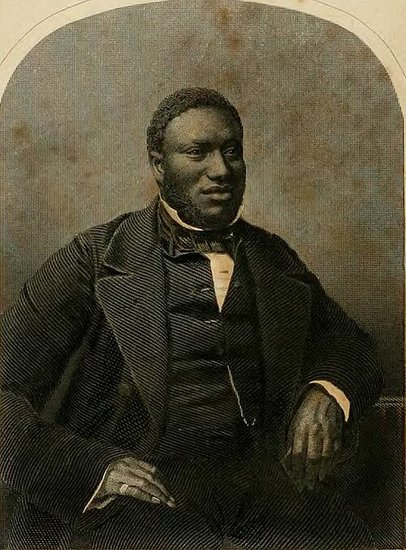
Samuel Ringgold Ward
Two African-American New Yorkers, William Wells Brown and Samuel Ringgold Ward, as well as two white New Yorkers, William Jay and John Jay II — descendants of American Patriot John Jay, will be inducted into the National Abolition Hall of Fame and Museum this fall.
Founded in 2004, the hall of fame and museum is in Peterboro in Madison County. Inductions take place every two years and the upcoming induction will be in October 2026. The hall currently features 32 inductees and is located in the same building in which the New York Anti-Slavery Society was organized in 1835.
The institution of slavery in New York dates to 1627 when 22 enslaved Africans were brought to present-day Manhattan by the Dutch West Indies Company. New York was the last northern state to free slaves, not until 1827.
The state’s Office of Parks, Recreation and Historic Preservation provided these profiles of the inductees.
William Wells Brown
William Wells Brown, a formerly enslaved African American who escaped north to live in Buffalo, became a prominent anti-slavery author and orator. Brown operated a steamship that carried freedom seekers to safety in Canada, wrote a narrative about his enslavement, and wrote a novel about the relationship between Thomas Jefferson and the enslaved Sally Hemmings, which was the first novel by an African American to be published.
Brown was nominated to the Hall of Fame by Patrick Ryan, cultural curator of the Richardson-Olmsted Campus National Historic Landmark in Buffalo.
Samuel Ringgold Ward
Samuel Ringgold Ward settled in New York after escaping slavery and became a pastor and orator for the American Anti-Slavery Society. He aided in the rescue of a fugitive slave in Syracuse, edited an abolitionist newspaper, and worked in England to raise money for the abolitionist cause.
In 1848, he was nominated to be New York abolitionist Gerrit Smith’s vice-presidential running mate on the Liberty Party ticket, making Ward the first African-American man nominated for national political office. Ward was nominated to the Hall of Fame by Butler Town Historian Lori Schmidt.
The Jays
John Jay (1745-1829) was a Patriot leader during the Revolutionary War who helped negotiate the Treaty of Paris, in which Britain recognized American independence. Afterward, he co-authored the Federalist Papers, was the first Chief Justice of the United States Supreme Court, and later became governor of New York, where he passed legislation in 1799 for the state’s gradual abolition of slavery over the next three decades. While he was known for his anti-slavery views, John Jay was also an enslaver.
William Jay (1789-1858), John Jay’s son, served as a judge and began his efforts against slavery in the 1820s. Co-founder of both the American Anti-Slavery Society and the American and Foreign Anti-Slavery Society, he provided shelter to freedom seekers escaping slavery and legal aid to free Black people who were wrongfully imprisoned. He was later removed as a judge in retaliation.
John Jay II (1817-1894) was William Jay’s son. Inspired by his father and grandfather, he became involved in the abolition movement as a college student. He was active in the Underground Railroad, a network that helped enslaved people escape bondage, and worked with the Albany site operated by Stephen and Harriet Myers, now the Underground Railroad Education Center. He also worked with the anti-slavery Free Soil Party and helped found the Republican Party.