Science should lead government both in offering guidance and in setting regulations
Elisabeth Vines
Much about health is a personal choice but it has public consequences.
Government plays an important role in citizens’ health. We depend on our government to enforce regulations that protect our health. And for nearly half of a century, Americans have relied on dietary guidance from the federal government to stay healthy.
Both the regulations and the guidance are currently being upended.
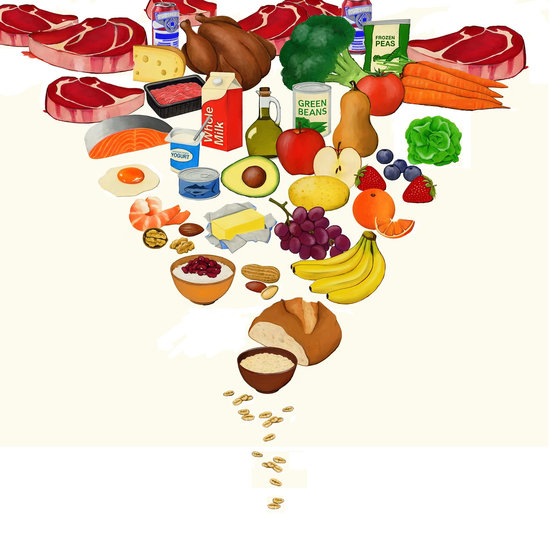
Earlier this month, the Trump administration turned the traditional food pyramid upside-down. The new dietary guidelines put whole milk, steak, and cheese at the top, a reversal of decades of advice to limit red-meat consumption and foods high in fats.
The guidelines shape the food served in our schools and hospitals, in prisons and in federal assistance programs. While we agree with Health Secretary Robert F. Kennedy Jr.’s succinct advice on presenting the plan — “Eat real food” — the devil is in the details, or lack of them.
Most Americans already eat enough protein and the new guidelines as much as double what had long been recommended — 0.8 grams per kilogram of body weight per day.
While reams of scientific research shows that heart health is improved and life is extended by getting protein from plants rather than animals, the guidelines include no such information.
Further, their origin has been questioned since members of the panel that worked on the guidelines have ties to the dairy and meat industries.
Another change is that the guidelines no longer advise men to limit themselves to two alcoholic drinks a day and women to one.
And no longer do the guidelines warn that alcohol consumption can increase the risk of breast and other cancers as well as increasing the risk of some forms of cardiovascular disease and overall of dying.
In sharp contrast, the surgeon general under the last administration, Dr. Vivek Murthy, had called for cancer warnings on alcohol, which Congress did not pass.
Murthy put out an advisory saying that alcohol use is a leading preventable cause of cancer in the United States, contributing to nearly 100,000 cancer cases and about 20,000 cancer deaths each year — and that fewer than half of Americans are aware that drinking alcohol increases their risk of cancer.
Of course the new guidelines will help the alcohol industry but who will pay in the long run?
Medical costs are borne by the society as a whole, not just by the individuals who suffer. Lost workdays and premature deaths hurt the economy while ever-expanding health-care demands can overwhelm a system already struggling to meet needs.
The primacy of industry over people’s health is also evident in the way the federal Environmental Protection Agency is now setting pollution limits for fine particulate matter and ozone.
The EPA now plans to calculate only the cost to industry rather than, as before, calculating the health benefits of curbing air pollution, which had involved calculating the cost of, say, avoiding asthma attacks or premature deaths.
While different administrations have used varying estimates for figuring the value of human life, in the four decades of EPA history, none, until now, has counted it as zero.
When wildfires in Canada increased particulate matter here in Albany County, our state’s health commissioner, James McDonald, explained that particulate matter is made up of particles smaller than 2.5 microns, noting, for comparison, that human hair has a diameter of about 50 microns.
“You can’t see it with your naked eye,” said McDonald, explaining that the invisible particles “can migrate down your respiratory tract.”
With less soot control, there will be more coal-burning and therefore more global warming, bringing on a myriad of environmental and human health problems.
In 2024, under the Biden administration, the EPA tightened the standards for soot pollution. The updated standard, the EPA at the time said, “will save lives — preventing up to 4,500 premature deaths and 290,000 lost workdays, yielding up to $46 billion in net health benefits in 2032. For every $1 spent from this action, there could be as much as $77 in human health benefits in 2032.”
The Biden administration said it based its new standard “on the best available science, as required by the Clean Air Act.”
Science should lead government both in offering guidance and in setting regulations.
As we’ve written on this page many times, science is not absolute — rather, scientific inquiry leads to discovery.
Each of us had front-row seats as we learned about COVID-19. The very first directives to prevent spread of the virus included washing surfaces, which later fell by the wayside as it became clear that the respiratory infection was largely airborne.
Mask-wearing eventually became accepted by most as the way to prevent the spread of the disease. And then, with seemingly miraculous speed, two new messengerRNA vaccines were approved in December 2020, allowing lockdowns to be lifted.
The long road to developing the mRNA vaccines had actually started in 1984 when a group of Harvard scientists used a synthesized RNA enzyme to make biologically active messengerRNA. Three years later, Dr. Robert Malone mixed mRNA with fat droplets and discovered that, when human cells were added to the mixture, they absorbed the mRNA and made proteins.
In the 1990s, researchers tested mRNA as a treatment in rats and as an influenza and cancer vaccine in mice. And so, through the years, the scientific inquiry persisted, resulting in a way to control a worldwide pandemic — although of course there are still people who deny the efficacy of the vaccination.
Vaccination, not just to prevent COVID, has been one of the greatest successes of modern science. Diseases like polio and measles have been drastically reduced worldwide and in some nations, like the United States, virtually eliminated.
This month, Kennedy announced a vaccination schedule for children that reduces the number of diseases prevented under routine immunization recommendations to 11 from 17.
Medical groups — the American Public Health Association, the American Academy of Pediatrics, the Infectious Diseases Society of America, the American College of Physicians, the Society for Maternal-Fetal Medicine, and the Massachusetts Public Health Alliance — have sued to block the change.
The American Medical Association put out a statement strenuously objecting to the change, focusing on the lack of science.
“Vaccination policy has long been guided by a rigorous, transparent scientific process grounded in decades of evidence showing that vaccines are safe, effective, and lifesaving,” wrote Sandra Adamson Fryhofer, M.D. “Changes of this magnitude require careful review, expert and public input, and clear scientific justification. That level of rigor and transparency was not part of this decision.”
She went on “When longstanding recommendations are altered without a robust, evidence-based process, it undermines public trust and puts children at unnecessary risk of preventable disease.”
The erosion in public trust spreads beyond just the vaccination of children for a half-dozen specific diseases.
Stanford Medicine researchers who looked at diseases like measles, polio, diphtheria, and rubella — diseases that have been essentially eliminated in the United States through vaccination — found that, for example, “under current vaccination levels, measles may be likely to return to endemic levels within the next 20 years, driven by states with routine vaccination coverage below historical levels and below the threshold needed to maintain elimination of transmission,” according to their study published in the Journal of the American Medical Association last year.
Of the measles cases reported last year in the United States — a huge increase over previous years — 93 percent were in people who were unvaccinated or had unknown vaccination status, according to the Centers for Disease Control and Prevention.
When we wrote at the start of this month about the spike in hospitalizations from influenza, we were startled to learn that less than a quarter of New Yorkers have been vaccinated against the flu.
We well recall the months of lockdown to curb the spread of COVID-19 as our county officials held regular press conferences, urging vaccination. We believe that was partly responsible for the county’s high inoculation rate.
Now, with our nation’s secretary of health being openly skeptical about vaccination, fewer citizens are protecting themselves.
This, in turn, affects all of us. The fewer people who are inoculated, the more a disease spreads.
Our advice in an era where our federal government is doing little to protect our health, favoring the health of industry instead, is to consult sources you trust — perhaps your physician — and read widely in reputable medical journals while making health decisions for yourself and your family.
You can, of course, control what you put in your mouth but you cannot control the purity of the air you breathe. Changing that will require a change of government.