Property owners saddled with water-line ruptures and repairs sue town

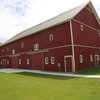
— From Google Earth
The owners of 302 Unionville Feura Bush Road in New Scotland are suing the town over who owns a malfunctioning four-decade-old water line running to their property.
NEW SCOTLAND — The town of New Scotland is being sued by a Feura Bush family over the ownership of a malfunctioning four-decade-old water line.
The lawsuit was filed on Dec. 11 by Thomas and Valerie Newell along with their daughter, Erin.
The suit centers on 2,000 feet — 1,200 of which are located on the Newells property — of six-inch ductile iron pipe that has leaked for years and “ruptured” three times since 2021, the suit says.
The Newells contend that the pipe is a water main that the town is obligated to maintain; the town asserts that the line is a private lateral and the burden of perpetual repair and replacement lies solely with the property owners.
Supervisor Doug LaGrange told The Enterprise in a statement on Thursday that the town will vigorously defend itself.
“The town received a lawsuit this week that was filed by Valerie and Thomas Newell and a family trust [which] owns a sixty-two acre property with a residence and horse stable in Feura Bush,” LaGrange wrote. “The town intends to defend this case.
“The lawsuit relates to a 40-year-old water line that services a Newell residence, which has been leaking in recent years. The Newells lawsuit seeks a court order forcing the town, the Feura Bush Water District actually, to replace the private water line, which is over a thousand feet long, is on private property, and services only their residents.
“The town has explained to the Newells that it will cooperate with the Newells efforts to replace the six-inch ductile iron pipe with a smaller and less expensive water line.
“The town, however, is legally prohibited from using public funds for a private purpose. The town also explained that it would be unfair to the Newell neighbors that the customers of the Feura Bush Water District had to pay the cost of improvements, which will only benefit the Newells.
“The estimates provided by the Newells indicate the cost of replacing the water line is tens of thousands of dollars, and the residents of the district should not be burdened with this expense. The Newells therefore will have to pay the cost of replacing the private water line.
“And we maintain that it is their private water line. The Newells argue that the town somehow owns the water line. The town disagrees. In fact, the Newells admitted in writing that they own the water line itself. Consequently, the town will vigorously defend this lawsuit.”
The complaint
According to the complaint, the pipe ruptured in May 2021, July 2023, and September 2023. Each time, the Newells claim in court documents, they paid for emergency repairs.
After the September 2023 rupture, the Newells proposed replacing a portion of the pipe on their property — approximately 500 feet — with two-inch high-density polyethylene pipe, connecting it back to the existing six-inch line at their boundary near National Grid lands, and “closing off” the remainder of the 6-inch line at the property edge.
In a September 2023 letter to the town, the Newells offered to assume responsibility for the segment on their land but not for the off-property stretch. In a response letter, New Scotland town attorney Michael Naughton rejected the plan.
In 2025, the complaint states, “Defendant’s Town Supervisor, Douglas LaGrange, in a letter dated August 26, 2025, wherein Defendant continued to maintain that any repairs made to the 6’’ DIP [Ductile Iron Pipe] water main by Plaintiffs must encompass the entire 2,000 feet of pipe,” and that the town “would not do anything to assist Plaintiffs in resolving the persistent leaks” because it considered the line private.
LaGrange also wrote that, if the Newells did decide to pursue the repair, it was on them to secure easements to bring about such repairs, and must include installing a meter pit at the beginning of the pipe’s length. The cost of a pit meter runs into the ten-of-thousands of dollars.
Main or lateral?
The crux of the case turns on whether the pipe is defined as a water main or a lateral.
Naughton wrote to the Newells in a 2023 letter that the six-inch line was a “private improvement installed solely for the benefit of your property.”
In multiple letters over multiple years, the town claims it doesn’t own the line because there was a lack of formal acceptance.
Naughton wrote in a September 2023 letter, “There is no evidence that the private line was formerly offered for dedication (called an ‘Offer of Cession’) or that the offer was accepted” by the town board.
The Newells claim the line is a water main because of:
— Its physical characteristics
The pipe is “principally a 6-inch ductal iron pipe,” the Newells assert in their complaint, which is a “typical material and diameter for many water mains used in other areas of Defendant’s municipal boundaries.”
Laterals serving homes do not have such large diameters, the filing states;
— A 1983 Niagara Mohawk Easement
Part of the 2,000-foot water line runs across land owned by National Grid, which bought Niagara Mohawk in 2000.
A permanent easement granted to the town by Niagara Mohawk in November 1983, the petition asserts, states the town desired to construct and maintain a water main as part of the [Feura Bush Water District], Contract No. 2, Jones Avenue Extension” upon Niagara Mohawk’s land.
The town, by executing this agreement, the Newells argue, admitted that the installation was a water main and accepted the obligation to maintain it after construction;
— A 1982 construction easement
A temporary construction easement granted to the town by the Rosselli family was for the “construction and/or expansion of a public water supply system … [and] will include installation of water mains, hydrants and valves,” which the Newells claim further confirms that the line built by the town was public water main infrastructure;
— A 1984 water-service application
The application, signed by the property’s prior owner, John Lyons, in 1984, indicates that the pipe size for the water service to be installed was three-quarters of one inch. The Newells assert this 3/4-inch line is the private lateral that taps into the six-inch municipal main; and
— Town regulations
New Scotland’s zoning code, the Newells’s attorney, William Ryan, writes in a letter to the town, states an “applicant shall install from the water main to the meter on the premises, a water service line and service connections,” which Ryan maintains supports the Newells’s assertion that the service line — lateral — begins at the terminus of the six-inch ductile iron pipe.
Causes of action
The suit as three causes of action:
— The first cause of action asks the court to settle the ownership question once and for all. The Newells seek a judicial declaration that the six-inch ductile iron pipe is, in fact, a town-owned water main;
— The second cause of action alleges a breach of contract. While there is no single written document serving as a contract between the Newells and the town, the lawsuit argues that an “implied-in-fact” contract exists based on the conduct of both parties over decades.
The Newells assert that, by accepting water service and paying bills since 2015, when they purchased their home — and with the previous owner doing the same since 1984 — a mutual agreement was established: The town provided the water; the homeowners paid for it.
The Newells argue this transaction implies the town has a duty to maintain the water main. By failing to repair the deteriorating pipe, the town is in breach of this implied agreement, the complaint states; and
— The third cause of action invokes the principle of “equitable estoppel,” that prevents a party from asserting rights or taking legal positions that contradict their prior statements, conduct, or representations, when another party has reasonably relied on those representations to their detriment.
The Newells argue that the town’s long-term conduct — specifically, supplying water through a 6-inch pipe originally designated as a water main in 1983 easements — led them to the “reasonable belief” that New Scotland “would not disclaim its obligation to maintain, repair, or replace the 6’’ DIP water main as it aged.”