Be the change you wish to see in the world
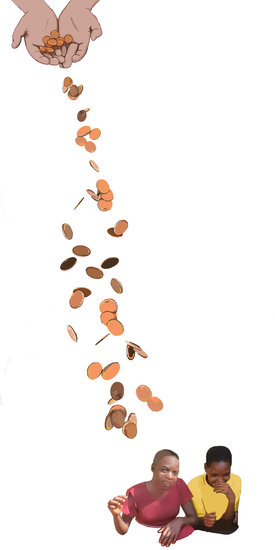
Art by Elisabeth Vines
Mohandas Gandhi was nonviolent even when it came to dealing with wildlife. In 1913, he wrote a piece for “Indian Opinion” in which he posited that calmness allows a person to control or live in harmony with creatures like snakes. As a person changes his nature, the world around him changes too.
“We but mirror the world,” Gandhi wrote in 1913, long before he led his countrymen against British rule. “All the tendencies present in the outer world are to be found in the world of our body. If we could change ourselves, the tendencies in the world would also change.
“As a man changes his own nature, so does the attitude of the world change towards him. This is the divine mystery supreme. A wonderful thing it is and the source of our happiness. We need not wait to see what others do.”
We thought of this passage as we talked last week to Christine White, who is retiring after decades at the helm of Lynnwood Elementary School classes. She has taught her students — third-graders and more recently second-graders — how to be the change they wish to see in the world.
One of the projects she is proudest of and that she hopes another teacher will embrace is called “Change for Change.”
“I always have spare change around that’s annoying me and I thought, if we collect change and make a change, that would just be a great win-win,” said White.
She has a big bottle in her classroom that the children fill with spare change. “The kids are really really excited about bringing in coins,” she said.
One will say, “This is from my grandmother.”
Another will say, “My parents let me take this out of my piggybank.”
Parents are supportive too. “I get really nice notes all the time, thanking me for helping their children to see the bigger picture and helping them to recognize that not every child lives the way we do in Guilderland,” said White.
When the bottle is filled, she takes the money to the bank. “I send it into the coin machine and it goes right into an account.”
If her class has collected $250, she rounds it up to $300 and uses Sendwave, for international money transfers, to send it to Aliga Ismail Issa who runs an orphanage in Uganda. Issa is the founding director of the Busedde Community Development Organization.
The 40 or so kids in his orphanage range from babies to 18-year-olds.
“Most of the kids lost their parents to AIDS,” said White.
When White started the program she had her students select books and write letters to the children in Uganda but the postage — at $200 per box — was too much and the boxes took months to arrive.
The Sendwave money arrives instantly and Issa uses it for books and tuition. “They have to pay for school there,” said White.
In return, Issa sends pictures of the children holding up signs of thanks they have written or reading the books that have been purchased with the money.
“It’s so cool for my kids to have that feedback,” said White. “They’re amazed.”
And so are the adults, she said, explaining, “Usually, when you donate money, you never truly know, or not very often, if it’s going to the right place … There’s so much fear over scams these days and you just don’t know for sure. So to get that feedback and to see they are actually getting this money and they’re benefiting, they’re going to school.”
She went on, “I’ve talked to my kids all the time about this and how important it is to help people all over the world and how they have nothing over there. They’re so joyful and they’re so thankful for everything they get.”
At Christmas time, White’s class sent funds so the orphanage could buy a goat to have a feast. Usually, White said, the children have just a bowl of grain like a porridge for breakfast, lunch, and dinner.
Issa sent White and her students pictures of the Ugandan kids smiling widely as they ate barbecued chunks of goat meat from sticks they held in their hands.
Sometimes, as White’s students look at the pictures of their counterparts in Uganda they notice that “their shoes don’t really fit them” or that their clothes are emblazoned with the logos of American sports teams.
“I tell them, ‘When you put your clothing in those big bins, you don’t know where they’re going — they go all over the world.’”
White said of her students, “They truly feel a deep empathy and I think a connection to these kids. They want to do more for them. They want to help them.”
White has always used project-based learning in her classrooms. To teach her students the difference between wants and needs, she sets up a system of classroom economics.
The kids are paid “fun money” for doing their jobs. She tells her students, “It’s just like our community. Here in our classroom, you have a job of being learners … You need to come in every day ready to learn. And, if you do that, then I give you $5.”
Then out of that $5, she takes “rent” money for the classroom, the tables, the lights — and for paying the teacher’s salary. Once the needs are paid for, the kids get to spend what’s left on what they want.
“We come up with a list of things they can buy with their money.”
White became enamored of Africa over the years she taught third grade. The curriculum includes “country studies” and Guilderland chose to focus on China in Asia, Brazil in South America, and Kenya in Africa.
White made “passports” for her students and dressed as a pilot. “I would fly my class to each one of those places and I would turn my whole room into that country and we would live there,” she said.
White went to Africa herself for real. She said she had her eyes opened and her heart broken as she visited Apartheid museums in South Africa.
She traveled with her cousin and they also stayed in safari camps in Botswana run by Natural Selection.
“They taught the people that the animals were worth more to them alive then hunting them,” said White of Natural Selection. “So they created these camps for tourists, hiring people in the village to work the camp. So it was really neat. The first camp we went to, we were the only tourists there … so we got to know the villagers.”
White and her cousin were invited to the village when, on a Saturday, “All the kids came to school to meet us … We got to meet their medicine man. It was incredible.”
White has had a life-long calling to work with children.
Raised in Massachusetts, she is the youngest of six siblings. Her mother worked in real-estate and her father in sales. Growing up, she loved children and animals.
When she got to college, she said, “My dad wouldn’t let me take the classes that I wanted because he said there was no money in teaching and he wanted me to go into hotel management like my brother. I didn’t do well. I ended up, like, failing.”
Then she met the man who would become her husband who encouraged her to pursue what she loved. She loved teaching and she never looked back.
“I feel like 35 years have gone by in a blink. I honestly don’t feel like I’ve ever worked a day,” said White, concluding of her teaching career, “It’s been a gift.”
Her own five children are grown now — she became a grandmother in August — and, at 62, she says she “wants to do everything I can. You don’t know how many days you have left on this Earth — and I really want to use them.”
White closes out every school year, including this one, by having her students write scripts for skits that they perform.
“It’s always a problem that could happen here at school,” she said. “It could happen on the playground or the bus or the cafeteria — and then they solve it in their skits.”
The skits use music by Red Grammer as their soundtrack. He is a musician that composes original songs for kids often with themes of teaching peace or kindness.
White’s colleagues surprised her last week with a retirement party where Red Grammer performed.
“His music has been a big influence on my teaching all through the years,” said White. “He called me up on stage and we sang … It was just incredible.”
White knew all the words.
“We’re going to change things, one by one, rearrange things …,” say the lyrics to Grammer’s song “Circle of Lights.”
White’s final wish: “Before I leave Guilderland, I want to make sure that I hand this off to somebody …. I certainly would be happy to work with anybody who wanted to get this up and running in their classroom.”
We urge a teacher to take White up on this request and continue the Change for Change initiative.
But more, we see in the lessons White has taught something we can all learn from.
We, as a nation, are withdrawing from helping others in this world we all share.
Issa runs an orphanage to help children whose parents died of AIDS. Our nation this past year stopped delivery of life-saving HIV medicines and the provision of HIV prevention services to millions of people whose lives depend on them — including in Uganda.
A story published by UNAIDS showed the devastation that shutdown caused through the lens of one Ugandan’s experience.
When 22-year-old Jokpee Emmanuel arrived at Reach Out Mbuya in Kampala, expecting to attend the Friends Forum — a safe space for young people to gather, share and support each other — he was instead met with a sign on the gate saying it was closed because of the suspension of funds from the United States.
“The Reach Out Mbuya community health initiative is not just a health facility,” says the UNAIDS story. “It is a lifeline. For years, it served Uganda’s most vulnerable communities, offering care that goes far beyond medicine. For Jokpee, who was born with HIV, Reach Out provided access to antiretroviral therapy, emotional support, school tuition and dignity.
“‘Reach Out was like a second home,’ he says. ‘They did not just give me medicines. They cared for me and reminded me that I am more than my diagnosis. I could live a full life.’”
Do many of us care about suffering on the other side of the world, about burdens borne by people we’ll never meet?
What gives us hope is thinking about the lessons learned by White’s students.
They have learned the difference between meeting needs and satisfying wants.
They have come to understand that, when one person has a spare coin, it won’t buy much. But, when an entire class comes together — bringing along a grandmother besides — to contribute unused change, it can make a difference.
They have seen, in real terms, the hope and joy their contributions have brought, helping children on the other side of the world whom they will never know.
And perhaps most importantly of all, the process of collecting and sending those coins may have changed the children themselves. As Mahatma Gandhi wrote well over a century ago, “A wonderful thing it is and the source of our happiness. We need not wait to see what others do.”