If you want to be a farmer, you have to love it — do we as a society promote it enough?
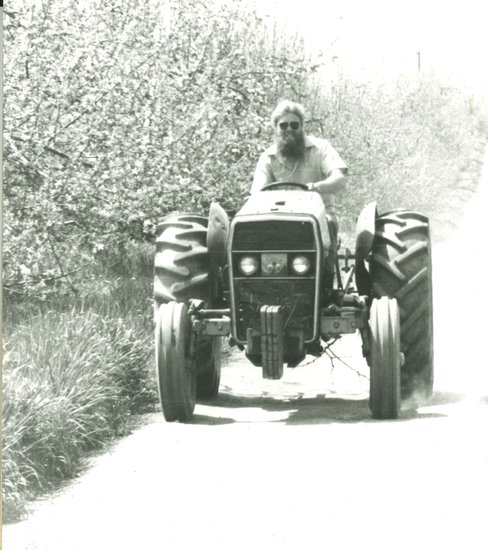
— Photo from Timothy J. Albright
Timothy J. Albright spent his career working at Indian Ladder Farms in New Scotland, retiring as farm manager.
To the Editor:
Last week, I wrote in part about the loss of farmland, and after submitting that letter, I realized maybe more importantly I should have written about the decline in women and men who take up farming as a career, or continue to operate generational farms.
The United State Department of Agriculture’s 2022 Census of Agriculture reported that the U.S. lost 141,733 farms between 2017 and 2022, a 7-percent decline. Recent data records approximately 15,000 additional farms lost in 2025.
Small farms are disappearing more quickly than larger ones. This decline is caused by high start-up costs for land and equipment, infrastructure, thin profit margins, high inflation, and a rise in all operating costs like fuel, fertilizer, pesticides, and labor, just to name a few.
The aging farm workforce is a factor as the average age of U.S. farmers is 58, with many retiring without a successor.
The younger generation recognizes the challenges and barriers to being a successful farmer. If you want to start a new farm you face high land prices, a lack of access to capital, and difficulty finding a willing labor force that will work for farm wages. Not to mention the physical requirements and continued good health that is needed without interruption.
Larger farms are doing better and dominate U.S. agricultural production by utilizing economies of scale to lower costs. Take a look at our educational system, and local schools, with regard to their push to send most students to college and become white-collar workers who will earn six-digit incomes.
I understand the desire to steer the student population in this direction but who is left to work our local farms? Well, I’ll tell you. It was and is immigrants.
Immigrants will work farms because they don’t have the choices for education and employment available to citizens of the United States.
That is only a couple of reasons why they come here, often leaving many family members behind, while seeking financial opportunity.
Many Americans don’t understand the difficulties of making a living in what some describe as a “third-world country” which is an outdated term describing economically developing, impoverished or underdeveloped nations.
These countries often share high poverty rates, poor infrastructure, and economic instability. If all of our high school students are destined for college and high-paying careers, we need immigrants who are willing to do farm work.
There are U.S. government work programs for agricultural guest workers but small farms can find it difficult to navigate and afford, as they must pay transportation fees, housing, and administrative fees.
And finally, our current administration is making scapegoats of immigrants much in the way Germany made scapegoats of its Jewish population leading up to World War II, blaming them unjustly for many of society’s problems through unfounded exaggerations.
Women and men entering into a career of farming are either initiated on a family farm or pursue a college degree in agriculture specializing in fields like animal science or agronomy, which is the science and technology of producing and using plants for food, fuel, fiber, and land reclamation.
They learn to manage soil, water, and crops efficiently, hoping to increase sustainable yields while also protecting the environment.
Many more women than ever are becoming farmers. If you want to be a farmer, you have to love it because it is a hard life of physical labor, potentially failed crops, long hours, and, quite often, most of the monetary rewards go to the grocery stores, if you cannot retail your crop yourself.
And as much work as growing fruits and vegetables is, the branch of agriculture called animal husbandry, which is focused on the breeding, rearing, and care of livestock such as cattle, sheep, pigs, and poultry for food, fiber, leather, etc. is a life of responsibility that rarely allows for time off as animals require your attention 24-7, every day, all the time.
So why am I writing about this? Because I spent my life working on a farm from the bottom up and for the most part, I loved it!
Working outside every day and growing a successful crop has many rewards. But I’m concerned about not only farmland preservation but more importantly who will want to be a farmer given the hardships associated with it.
Do we as a society promote it enough, reward it enough, to make it an attractive career path?
Do our primary and secondary education systems encourage it?
Does our government do enough to help small farms get started and sustain them through hard times and crop failures?
This is where our food comes from, folks. Farming has always been depicted as a noble, rewarding, and a deeply fulfilling way of life connecting people with nature, animals, and the soil that is “Mother Earth”!
Thomas Jefferson said, “Those who labor in the earth are the chosen people of God.”
Timothy J. Albright
Meadowdale