Guilderland appeals judge’s procedural maneuver in tax certiorari case
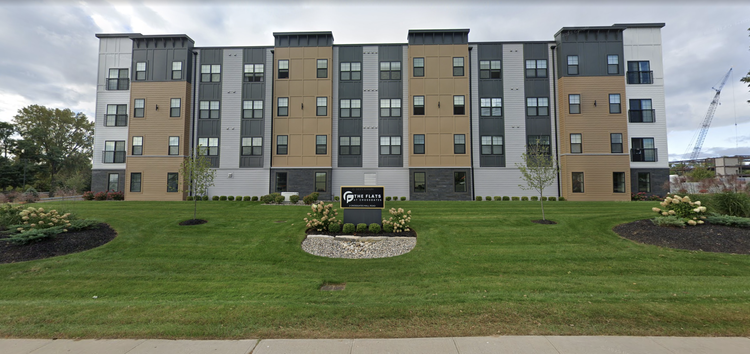
— From Google
The town of Guilderland is asking an appeals court to toss out a judgement that allows the owner of The Flats at Crossgates to refile a tax lawsuit.
GUILDERLAND — Guilderland is asking an appeals court to overturn a procedural ruling from a lower-court judge that allowed a property owner to refile a tax lawsuit against the town after the owner improperly notified Guilderland of the suit.
The town is appealing Supreme Court Justice Peter Lynch’s decision extending 2 Crossgates Mall LLC’s deadline for serving legal papers in the property-tax dispute first filed in July.
The attorney for 2 Crossgates Mall LLC, Scott Ronda, declined comment.
Supervisor Peter Barber, said via email, “The 2 Crossgates Mall Road matter is a tax grievance matter. It’s being handled by the Town’s retained attorney.”
First brought to the town in February 2022, Viscusi Builders of Rotterdam built the four-story residence, now known as The Flats at Crossgates, at 2 Crossgates Mall Road, a 1.54-acre parcel of land sandwiched between Crossgates Mall and the Hilton hotel on Route 20.
In the tax case, 2 Crossgates Mall sought to reduce its assessed value from $4.85 million to $2.8 million, with the LLC properly commencing the suit by filing a Notice of Petition and the petition itself with the Albany County Clerk on July 28 of last year.
2 Crossgates Mall served Albany County and the Guilderland Central School District via certified mail a week later, but no mailing was ever made to the town of Guilderland, its board of assessment review, or Town Assessor Heather Weinhold.
According to the latest available information, 2 Crossgates Mall paid taxes of:
— 2026 General Fund: $6,743.17;
— 2026 Albany County: $16,613.51;
— 2026 Highway: $142.02;
— 2026 Westmere Fire District: $6,174.99;
— 2026 Guilderland Sewer Zone A: $732.42;
— 2026 Sewer operation and maintenance: $7,374.99;
— 2026 Guilderland water: $3,336.17;
— 2025 School: $96,160.25; and
— 2025 Library: $5,078.18.
The decision
Three factors played into Judge Lynch’s decsion to allow the case to move forward under the “interest of justice” standard.
The first was the expiration of the statute of limitations. Lynch wrote that “the proceeding was timely commenced,” but the deadline to challenge the 2025 tax assessment had since passed.
Lynch wrote that state law typically allows parties to refile after certain dismissals, but it does not permit refiling when dismissal is for failure to serve.
Dismissal would permanently bar 2 Crossgates Mall from pursuing what it claims is more than $2 million in excessive taxes, with no legal remedy available, representing what Lynch characterized as a choice between harsh technical dismissal and allowing a timely-filed case to proceed on its merits.
The second factor involved the question of prejudice. Lynch stated that “historically, tax certiorari proceedings move at glacial speed, and it is manifest that Respondent would not be prejudiced in the defense of the proceeding upon extending the time for service.”
Lynch found the town's claims of prejudice unconvincing because tax certiorari cases typically take years to resolve, giving the town ample time to prepare its defense.
The third factor was the distinction between two separate legal standards.
The “good cause” standard, Lunch wrote, is narrow and requires diligence, which 2 Crossgates Mall failed to demonstrate. The “interest of justice” standard is broader, and considers mistakes, confusion, or oversight when there is no prejudice to the opposing party.
The town’s counterargument
Guilderland argues this is not a case where the property owner attempted service and failed — 2 Crossgates Mall made zero effort to serve the town, it says.
The town further contends that excusing attorney negligence where the lawyer simply forgot to serve the town rewards incompetence and undermines procedural protections designed to ensure defendants receive timely notice of legal claims against them.
The town argues that, even under the “interest of justice” standard, a complete lack of effort should not be excused, and that Lynch’s decision effectively eliminates any meaningful consequence for wholesale failure to comply with notification requirements.
The town also claimed that a reduction of more than $2 million in assessed value would impact its entire tax base.