Guilderland files third-party lawsuit against Burger King property owner
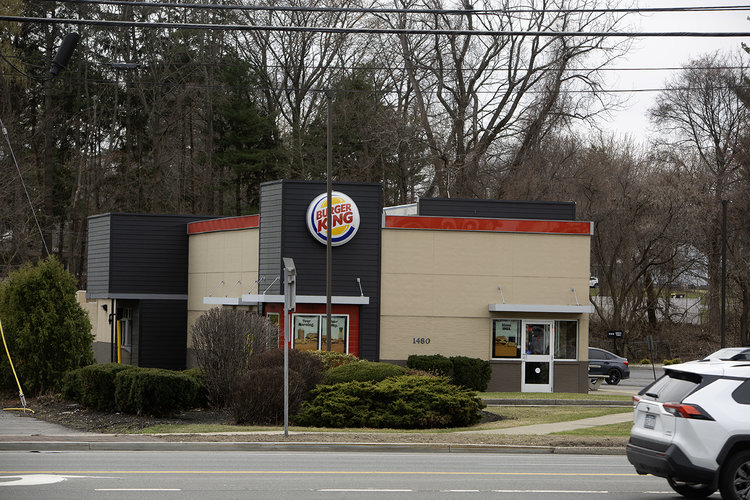
Enterprise file photo — Michael Koff
Guilderland has filed a third-party lawsuit against the landlord of Burger King on Western Avenue, claiming that the property owner and not the town is responsible for stormwater damage that caused the fast-food restaurant to shut down its drive-thru for six months last year.
GUILDERLAND — The town of Guilderland is looking to shift responsibility in a lawsuit filed by the owner of a local Burger King from itself to the landlord of the Western Avenue fast-food restaurant.
The town in a third-party claim filed March 12 against VF 1480 Western LLC seeks contribution and indemnification from the limited liability company in a lawsuit brought by its chain-restaurant tenant.
The purpose of a third-party claim is for the defendant — in this case, the town of Guilderland, which now becomes a third-party plaintiff in the suit — to seek indemnification or a contribution or both — the town is seeking both — from the new party, VF 1480 Western, the owner of the land underneath the Western Avenue Burger King.
VF 1480 Western did not respond to a request for comment.
Carrols LLC in March of last year filed suit against the town seeking compensation for a hefty contractor bill and revenue loss caused by flooding in an area of town long known for washouts.
The March 2025 complaint from Carrols, owner of over 1,000 Burger King venues in 23 states, claimed Guilderland was the owner of, and therefore responsible for, a 36-inch corrugated metal pipe (CMP) running under its Western Avenue location, across the street from Stuyvesant Plaza. The suit claims that the pipe’s failure caused significant flooding and erosion on the property, which forced the closure of its drive-thru service and resulted in financial losses.
According to the Carrols’ complaint, a flooded depression appeared on the Burger King property in December 2023 — initially measuring about 4 feet by 4 feet but eventually growing to 82 feet in length, 26 feet in width, and 8 feet in depth. The expanding erosion forced Carrols to close its drive-thru for six months, resulting in what the company said was a $400,000 revenue loss, while repair of the pipe and pumping of the stormwater cost over $1 million.
During a January 2024 meeting, the Carrols’ complaint stated, Guilderland denied ownership and responsibility for the failed stormwater pipe. Despite the denial, according to the filing, Carrols worked with the town to secure repair permits. By March 2025, erosion caused a dramatic expansion of the depression, court papers claimed, and Carrols started pumping the water at its own expense.
In the ensuing months, it was determined, following a visual inspection, that the corrugated metal pipe was the cause of the problem, which Guilderland for a second time denied owning. The town was served a notice of claim within the required time period, the filing states, repairs were eventually made, and the drive-thru reopened.
Carrols’ complaint made four claims against the town — unjust enrichment, nuisance, trespass, and failure to maintain an easement — and seeks reimbursement of over $1 million in repair costs and roughly $400,000 in lost drive-thru revenue.
The third-party complaint
In its third-party complaint, the town “denies that it owned, operated, maintained, or controlled the corrugated pipe at issue and denies any liability to Plaintiff.” The town asserts that it “had no ownership interest in, control over, or responsibility for the Pipe or the Property at any relevant time.”
The town instead identifies VF 1480 Western LLC as the responsible party.
According to the third-party complaint, the corrugated metal pipe “was owned by, and was the exclusive property of, VF 1480 Western.” The pipe became part of VF 1480’s property when the company acquired the parcel, and with that ownership came legal obligations.
As the owner of the property at 1480 Western Ave., the town argues, VF 1480 “owed a duty to keep the Property free of dangerous or hazardous conditions, and had a duty to maintain, repair, inspect, and assure the safe condition of the Pipe located on and beneath the Property.”
The town alleges that, prior to and including Dec. 18, 2023, the company “violated its duty as it failed to properly maintain, repair, and/or inspect the Pipe, allowing it to fall into a state of disrepair and become an unreasonably dangerous condition of the Property.”
The complaint also asserts that VF 1480 “created, knew or should have known of the deteriorated and dangerous condition of the Pipe and failed to take reasonable steps to address, remedy, or warn of such condition” — meaning the town contends the company was on notice that the pipe was deteriorating and took no action.
The town concludes that VF 1480’s “negligence, omissions, and failures” were the “direct and proximate result” of the pipe’s failure and the damages Carrols now claims.
Causes of action
Guilderland’s complaint includes two causes of action.
In the first, Guilderland argues that, if any judgment is entered against the town, “such damages were caused, in whole or in part, by the negligence, carelessness, recklessness, and/or wrongful conduct of VF 1480 Western.”
The LLC is liable, the town claims, because it owned both the property and the pipe and either “created a dangerous condition” or “failed to maintain, repair, and inspect the Pipe in a reasonably safe condition” before the December 2023 failure.
The second cause of action seeks indemnification, full reimbursement of any liability, legal fees, and costs the town may incur in the Carrols lawsuit. The town argues that, even if a court finds it liable to Carrols, “such liability would be entirely derivative of, secondary to, and dependent upon the negligence, carelessness, and wrongful acts and omissions of VF 1480 Western LLC.”