From emaciated and traumatized, to well fed and loved, 500 equines have been saved by Unbridled Sanctuary
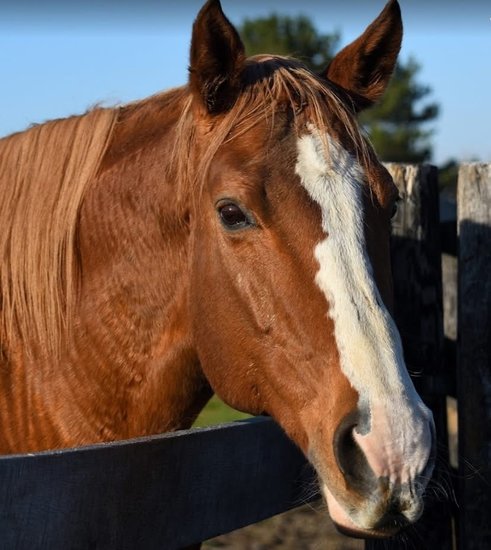
— Photo from Diana M. Hinchcliff
Posey is racing royalty, owned by the ruler of Dubai and descended from Triple Crown winners. At 18, she was sent to slaughter but rescued by Unbridled Sanctuary. The Dubai ruler paid $2 million for her; the local sanctuary paid $200.
To the Editor:
They thunder down a track at 38 miles an hour, the roar of the crowd in their ears, running as if their lives depend on it — because they do. All motion and long stride and determination, Thoroughbred horses don’t like to race, they endure it.
The champions retire to a permanent home with all the hay they can eat and all the future winners they can produce. The ones that come up short — consistently losing, crossing the finish line at the back of the pack, in pain from injuries or, as happens often, fracturing a bone or tearing a muscle because they’re raced too young — face a fate they cannot imagine even if they were able to.
Horses aren’t fully developed until they’re 6 or 7 years old. Yet, they’re trained to race when they’re 2 and raced at 2 or 3. This is like forcing a young teenager to run a 26-mile marathon. When they become too old, too injured or too slow, they're sold to stand at stud or as brood mares. When they can't produce live foals anymore, they’re sent to a kill pen — death row for equines — along with hundreds of other horses, mules, and donkeys awaiting a trip to the slaughterhouse.
Each year, more horses are born than can be employed for racing, farm work, competition, pleasure riding or pulling carriages and wagons. In the United States alone, 26,000 horses intended for human consumption, some healthy, many blind, injured, abused or neglected, are shipped to slaughterhouses in Canada and Mexico annually.
Because kill pen owners want to realize the most income for the least expense, these doomed animals are given only enough food and water to sustain them until they’re taken away, their wounds and injuries left untreated, their pain unrecognized.
This is where equine rescue organizations come in. There are only about 1,000 of them in the United States to serve the many thousands of unwanted horses.
One such facility is Unbridled Sanctuary in Greenville, New York, a not-for-profit farm founded by former trainer and competitive rider Susan Kayne that houses 65 mostly Thoroughbreds but also other breeds of horses as well as two former work mules and three snow donkeys (full disclosure: I’m a volunteer there).
During 21 years of operation, Unbridled Sanctuary has saved over 500 equines of all ages and physical conditions destined for slaughter. They arrive emaciated, their ribs showing, their bones sticking out, diseased and with untreated wounds and injuries. They’re traumatized, scared, and without hope.
A veterinarian checks them out and prescribes treatments and medications. They’re given a high quality, nutritious diet with vitamins and supplements and lots of love and attention from staff and volunteers. Horses are turned out into paddocks where they can run because they want to, not because they’re forced to, and into pastures with lots of grass to eat.
Horses have distinct personalities. They’re intelligent, dignified, and loyal to a fault. They have a sense of humor; get angry; grieve; become depressed; can be playful; provide comfort and support to other horses, animals, and people; and make wonderful companions.
Each resident survivor at Unbridled Sanctuary has a history. Sometimes it’s available for Thoroughbreds from their registration with the Jockey Club. For others, it must be pieced together from what little information can be gathered. Here are two of their stories.
Posey is racing royalty. A Thoroughbred born in 2001, originally named Possession, she was purchased as a 2-year-old by the then-ruler of Dubai for $2 million ($3.6 million today), her price a reflection of her bloodlines.
She is descended from Triple Crown winners and champions: Secretariat, Seattle Slew, Northern Dancer, Danzig, A.P. Indy, Raise a Native, Mr. Prospector, Tomisue’s Delight, and other luminaries of the racing world. She was raced twice, both times ridden by Julie Krone and finishing in the money, then used as a broodmare in the United States and Great Britain.
When at 18 years old she couldn’t produce any more children, she was sent for slaughter when Unbridled Sanctuary rescued her for a mere $200 in 2019. Once a true child of the Sport of Kings, her coat was dull and dirty with her ribs protruding around a belly bloated with parasites. Her hooves and teeth had been long neglected and her weary bones held no more hope.
Today, her mottled chestnut and black coat, reminiscent of her forbears Secretariat and Seattle Slew, shines and she delights in attention from visitors and volunteers.
Miss Kitty was sent for slaughter not once but twice. Born in 2007 and bred to be a champion, her registered name is Karen Sue’s Kitten. Her father was an American Champion Turf Horse.
At 11 years old and following 23 races, there was no more relief for the pain in her body and legs and she was used for breeding. After producing one colt, she was sent to a kill pen bound for a dark fate. She was rescued by a young woman who used her for barrel racing, a brutal competitive sport in which horses must navigate a course of staggered barrels, like slalom skiing.
To win with the best time, the horse has to lean in with only a couple of inches separating it from the barrels. Her aging, delicate body and knee joints were so damaged from the repetitive stress, excessive wear and tear, and frequent change in direction and rapid deceleration that she was no longer of use and her rescuer returned her to the kill pen.
Saved by Unbridled Sanctuary in 2024, she was malnourished, underweight, in pain, and had untreated dual-hoof abscesses in her hind foot. Renamed Miss Kitty after the kind-hearted saloon owner in the old TV series “Gunsmoke,” she displays a gentle, introverted, Zen-like personality, the trauma from her past life still preventing her from feeling completely secure and comfortable around people.
Unbridled Sanctuary is a special place where each rescued resident is treated with respect and nurtured by love. Older horses live out their lives in this, their forever home. The younger ones can be adopted for pleasure riding, dressage, show, or as a companion to other horses.
Unbridled Sanctuary’s annual operating budget of around $1 million is funded entirely by donations that provide veterinary and farrier care, medications and treatments, vitamins and supplements, nutritious food, supplies, maintenance, and salaries for the small staff who help attend to the property as well as the equine residents.
There is an open house every third Sunday of the month from noon to 4 p.m. when the public is invited to take a tour and meet the horses, mules, and donkeys. More information about Unbridled Sanctuary and the horses, including a beautiful video, is at: https://www.susankayne.com/unbridled.html. Donations and new volunteers are always welcome.
Diana M. Hinchcliff
Rensselaerville