Voorheesville drops remainder of Norfolk Southern lawsuit
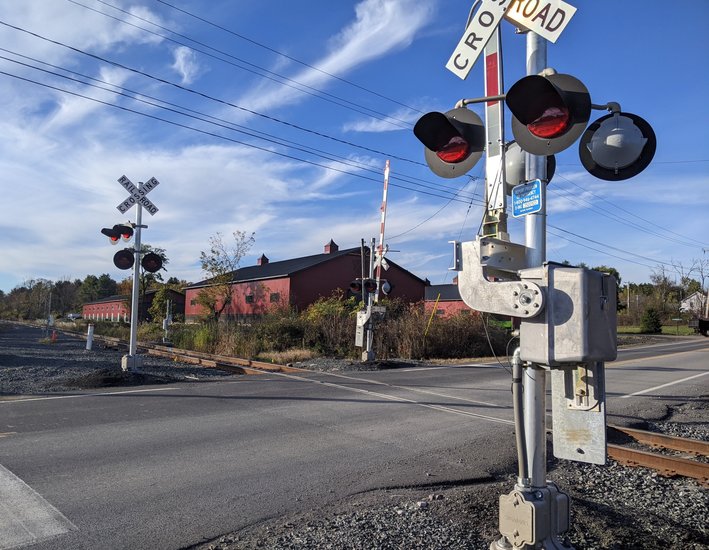
Enterprise file photo — Melissa Hale-Spencer
1 Countryside Lane off of School Road in Voorheesville is the future site of a Norfolk Southern crew-change facility.
VOORHEESVILLE — After being dealt a blow early last month in its attempt to stop construction of a Norfolk Southern crew-change facility in the village, Voorheesville has now dropped the remainder of its federal lawsuit against the freight carrier.
In a Dec. 30 letter to Judge Paul Evangelista, the village attorney in the case, Jack Calareso, wrote, “As neither an answer nor motion for summary judgment has been filed in response to” Voorheesville’s counterclaims against Norfolk Southern or its third-party suit against JC Pops, the village “is entitled to voluntarily dismiss its claims .…”
The voluntary dismissal was done “without prejudice,” meaning the village technically reserves the right to refile the claims.
Neither Norfolk Southern nor village Mayor Rich Straut immediately returned requests for comment.
In December, after the court ruled Norfolk Southern could proceed with building a crew-change facility, Mayor Straut told The Enterprise, “It’s the railroad and we knew it was going to be a long shot.”
Norfolk Southern requires the crew-change facility in Voorheesville to support its expanding freight operations between New York and New England. The railroad operates over 161 miles of CSX-owned track but cannot stop for crew changes along that route. Since crews departing from Binghamton — 130 miles west of Voorheesville — approach their federally-mandated hour limits upon reaching the village, the swap must occur there; otherwise, trains cannot legally complete the journey to Massachusetts.
Construction was allowed to move forward following a Dec. 3 order signed by Chief Judge Brenda Sannes that granted Norfolk Southern’s request for a preliminary injunction and further ordered that the village was “immediately enjoined and restrained from enforcing the stop work order and underlying zoning requirements preventing Norfolk Southern from constructing the crew-change facility.”
What wasn’t decided at the time were concerns raised by the village over a settlement agreement between itself, Norfolk Southern, and CSX, along with a third-party suit filed against JC Pops, owner of the land where the facility is to be built.
Norfolk Southern paid $450,000 in August for approximately one acre at 1 Countryside Lane, carved from JC Pops Industrial’s 5.7-acre parcel near the Voorheesville Public Library.
The village declared this an “illegal carveout,” arguing the land modification required formal subdivision review — which Norfolk Southern bypassed while simultaneously requesting a waterline extension. The village further contended the remaining JC Pops property now violates minimum lot-size requirements.
By targeting JC Pops rather than the railroad directly, Norfolk Southern asserted, the village attempted to circumvent the 1995 Interstate Commerce Commission Termination Act, which exempts railroads from local land-use regulations.
The 2021 settlement agreement emerged after CSX moved to acquire Pan Am Railways in November 2020 — a deal Norfolk Southern initially opposed before the carriers struck an arrangement allowing Norfolk Southern to reconnect and use CSX’s line through the village twice daily.
Voorheesville raised concerns with the Surface Transportation Board, leading to negotiations and a December 2021 settlement in which the village withdrew its complaint after the railroads agreed to minimize community impacts and participate in site-plan review.
Voorheesville argued the STB’s conditional merger approval effectively federalized the contract, making Norfolk Southern’s plan a violation of its promise. The village contended that stopped trains could block all three surface crossings, potentially severing emergency access to half the town, constituting a material breach. By violating its federal license conditions, the village argued, Norfolk Southern forfeited its federal preemption protections.
Norfolk Southern countered that “minimize” did not mean “eliminate” impacts, and that trains blocking roads are unavoidable physics, not contract violations.
The company provided a staging plan: eastbound trains stop west of School Street crossing while westbound trains use a designated landing pad near Hennessy Road — positions calculated to keep crossings clear during stationary crew swaps, though moving trains will temporarily block crossings while accelerating or decelerating.
Norfolk Southern maintained that, if Voorheesville believed the agreement was breached, the proper remedy is petitioning the STB, not using zoning laws, which the railroad characterized as illegal self-help.