Let grief be a fallen leaf at the dawning of the day
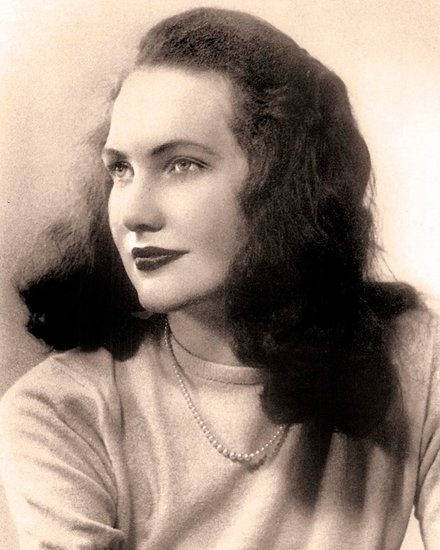
Hilda Moriarty
For Melissa Hale-Spencer
How often has it been said that, on St. Patrick’s Day, “Everybody’s a little Irish?”
There’s more than a wee bit of truth to that, in that it reflects the inclusive spirit the Irish show in their hospitality, especially for the poor, having been so very poor themselves not too long ago.
I feel hospitality in the lilt of the ways the Irish speak. Go to Connemara, Kildare, Kerry and any other of the 23 counties in the Republic, walk into their shops and look around, talk to people on the street, and you will hear a language that can only be defined as poetry, and poetry, as we know, is a mode of hospitality.
Historians say the poetic strain comes from the Irish having one of the oldest vernacular traditions in Western Europe — vernacular as in speech embedded in the tongue of the common people, which in the Irish often enough manifests itself in a wit spiked with barbs.
It’s not speech studied at a university, but words that fall off the tongue unconsciously because they are rooted in the soul. Barbed or not, the words are often filled with that beloved Irish sense of humor.
In his 90-minute interview with Mel Brooks — as part of his “Serious Jibber-Jabber” series — Conan O’Brien tells the greatest master of cinematic comedy in the 20th Century that he believed, growing up, humor and being Irish were one and the same, until he saw Jewish comics play with words in the most brilliant of ways: through irony, satire, and an anti-authoritarianism that took aim even at their own religious traditions.
Mel responded that, when he was growing up, in a community of wall-to-wall Jews — his words — in Williamsburg Brooklyn, being a Jew and humor were one and the same. Gentiles? Mel says, “I don’t think they get it.” He said Jews were the champs when it came to making people laugh at the absurdities of life while conveying to all what is essential in living.
But then Mel adds that, when he ran into Seán O’Casey, Samuel Becket, Yeats, and the like, “I discovered that they were all Irish writers, James Joyce! the best fucking writers in the world and that not one of them was a Jew. I just had a nervous breakdown, I did, I mean I cried for about a month.”
I study the Irish every chance I get — I am an Irish citizen — and what grates on me still is the genre of Irish-American I described here years ago as “Plastic Paddies.”
Talking to one such Paddy not long ago who was waxing high about his Irish-ness, I said, “How wonderful you feel that way; who is your favorite Irish poet?” And the person stunned, retorted, “Poet? Why would I want to get into anything like that?”
I have my favorites of course — to stay with the subject of Irish poet — not only because of how they say things but what they say as well.
I love Heaney, Yeats, Boland, and Muldoon to mention a few of the heavies — Heaney’s obit in The New York Times came with a large photo on Page One above the fold! — but poet-wise my mini-Irish heart runs to the likes of Michael Hartnett, and Paul Durcan — who just died in May — and the head of my choir, Patrick Kavanagh.
And it’s to Paddy Kavanagh of Inniskeen, County Monaghan, I’d like to call our attention this St. Patrick’s Day week, and to one of his most endearing poems, “On Raglan Road,” which the likes of Van Morrison, Sinéad O’Connor, Roger Daltrey, and a dozen other luminaries have sung — Paddy’s words put to the traditional Irish air “The Dawning of the Day.”
Writer and broadcaster Benedict Kiely recalled in a 1974 interview for RTÉ (Raidió Teilifís Éireann, Ireland's National Public Service Media) that Paddy said he’d paired verse and tune while writing the lines. It’s said the great songster Luke Kelly was given the verse/song by the master himself, that very evening at The Bailey, the famed Dublin pub.
The story behind the poem is filled with a million ironies.
In his twenties, Kavanagh came to Dublin straight from the farm to live, carrying a few poems and a minor rep as a writer in his overalls.
The buckleppin’ Irish writer Brendan Behan, a native Dubliner with a big-time chauvinistic tude, couldn’t stand the oafish hayseed from the start, calling him — as Dubliners referred to folks who worked the fields — a “culchie.”
And because Kavanagh sought out younger poets and artists in search of a community, Behan dubbed him “king of the kids” and for his sexual prowess the “Monaghan wanker.” The two were gas and fire so anytime Behan entered the front door of McDaid’s at 3 Harry Street in the city, Kavanagh darted out the back for his survival.
When it came to wooing the more sophisticated gals on Grafton Street, Paddy showed himself to be the poorest of oafs, his Venus a version of Mars.
And with respect to the poem in question, Paddy had fallen head over heels for Hilda Moriarty, a young Dublin lass interested in writing, but more importantly who was said to be the most beautiful woman in Dublin.
Indeed, Hilda was called to Hollywood for a screen test but lost out to — you’ll never guess — Maureen O’Hara. Her Kerry accent might have been a factor but it was more because Dubliner O’Hara had been involved with the Irish stage since she was 10.
Kept at a distance by Hilda, Paddy stalked her, sometimes sitting in a café surveilling her as she and her girlfriends chatted away at a table nearby. This and the rest of Paddy’s life is found in the brilliant “Patrick Kavanagh: A Biography” by Antoinette Quinn, a work of genius itself.
On one occasion, while Paddy and Hilda were speaking about writing, she teased the culchie that all he could do was write about “cattle and sheep.”
Cut to the quick, Kavanagh boasted he could write a poem about a woman too, “In fact, I’ll write a poem about you!” From that came “On Raglan Road” in 1944.
Hilda not long after married Donogh O’Malley, a conventional man who held important government jobs such as the Fianna Fáil Minister for Education. Having given up thoughts of writing herself, Hilda became like her father, a medical doctor.
Many years later, the two met when Paddy was a skeleton of himself — he was 20 years her senior — they said hello and a final goodbye. But their love had not been forgotten. On the morning of Hilda’s burial in Limerick, in March 1991, the Taoiseach of the Day read Paddy’s poem of unrequited love into the record of the Dial, another act of Irish hospitality.
Kids in school still read Paddy’s work and even the least scholarly among them can recite his famed early poem “Stony Gray Soil,” where he explains why he lost his love to O’Malley.
The first stanza goes:
O stony grey soil of Monaghan
The laugh from my love you thieved;
You took the gay child of my passion
And gave me your clod-conceived.
Mel Brooks admitted without begrudgement that the Irish have a congenial way with words, and, if he’s heard “On Raglan Road” set to the “Dawning of the Day,” he knows the Irish have a way with a heartfelt song as well.
Luke Kelly’s rendition of the poem/song is grand indeed but this St. Patrick’s Day I recommend Declan O’Rourke and Glen Hansard’s version sung at the great fiddler John Sheahan’s 80th birthday party several years ago — Luke’s presence is there for all to see in images cast upon a screen, Irish hospitality at work again.
Here’s the song: https://www.youtube.com/watch?v=e05Xfys4wxg. Watch it and hear Paddy’s mournful plea.
And, as you do, I know you’ll feel a wee bit more Irish this St. Patrick’s Day; the video’s like a Lay’s potato chip, you won’t be able to watch it just once.
Therewith, Happy St. Patrick’s Day to all.